
TL;DR:
- The Israeli employment dispute process mandates negotiation, hearings, and litigation to resolve workplace conflicts. Courts can nullify dismissals that bypass procedural steps, especially the shimua hearing, and award significant damages for violations. Foreign workers have equal rights, and statutory protections cannot be waived by employment contracts, even those governed by foreign law.
The Israeli employment dispute process is a legally mandated sequence of steps designed to fairly resolve workplace conflicts under Israeli labor law. Whether you are a local employee, a foreign worker, or an expat employer, this process follows a defined path: negotiation first, then formal hearings, and finally litigation in the Regional Labor Court if no resolution is reached. The framework draws on statutes like the Foreign Workers Law and the Equal Opportunities Law, and it centers on a critical procedural step called the shimua hearing. Understanding how this process works protects your rights and keeps you out of costly legal trouble.
What is the Israeli employment dispute process?
The Israeli employment dispute process is the structured legal framework that governs how workplace conflicts are raised, heard, and resolved under Israeli labor law. The process is not optional. Employers and employees must follow specific procedural steps, or they risk serious legal consequences including court-ordered reinstatement and financial damages.
The process covers a wide range of conflicts, from wrongful termination and unpaid wages to discrimination and harassment. The Ministry of Labor oversees enforcement of statutory rights, while the Regional Labor Court handles formal litigation when parties cannot reach a settlement. Israeli labor law also grants the court authority to nullify dismissals that skip required procedures, regardless of whether the underlying reason for termination was valid.
Two legal pillars anchor the entire system. First, the shimua hearing gives employees a formal right to respond before any dismissal takes effect. Second, statutory protections on severance pay, notice periods, and minimum wage cannot be waived by contract. These protections apply to Israeli nationals and foreign workers alike, which makes the process especially relevant for expats and international employers operating in Israel.
What are the common causes and types of employment disputes in Israel?
Employment disputes in Israel arise from a predictable set of triggers. Knowing them helps both workers and employers spot problems early and respond before conflicts escalate.
The most frequent causes include:
- Wrongful termination. Dismissal without a proper shimua hearing, without adequate notice, or in retaliation for protected activity such as filing a wage complaint.
- Wage and benefit disputes. Failure to pay minimum wage, overtime, pension contributions, or annual leave entitlements as required by Israeli statute.
- Discrimination and harassment. Claims under the Equal Opportunities Law, which prohibits discrimination based on nationality, religion, gender, age, or family status.
- Contractual violations. Breach of employment contract terms, including job scope, compensation structure, or working hours.
- Foreign worker rights violations. Failure by employers to provide mandatory accommodations, medical insurance, or legal work permits as required under the Foreign Workers Law.
Foreign workers and expats face a distinct set of risks. An expat employment dispute with an Israeli employer often involves confusion about which country’s law applies. Israeli courts apply Israeli statutory protections regardless of what the employment contract says, even if the contract cites foreign law. That means an expat who signed a contract governed by another country’s rules still holds full rights under Israeli labor statutes.
Expat landlord-tenant disputes in Israel follow a separate legal track, but they share a common thread with employment conflicts: Israeli courts prioritize statutory protections over contractual terms. Workers and tenants alike often discover that rights they thought they had waived are still fully enforceable.
The Equal Opportunities Law is particularly important for foreign nationals. It prohibits employers from treating workers differently based on national origin or immigration status. A foreign worker who faces discriminatory treatment at work has the same right to file a complaint with the Ministry of Labor as any Israeli citizen.
Pro Tip: Document every workplace incident in writing, including emails, text messages, and meeting notes. Israeli labor courts place significant weight on written evidence when evaluating disputed facts.
How does the employment dispute resolution process proceed step by step in Israel?
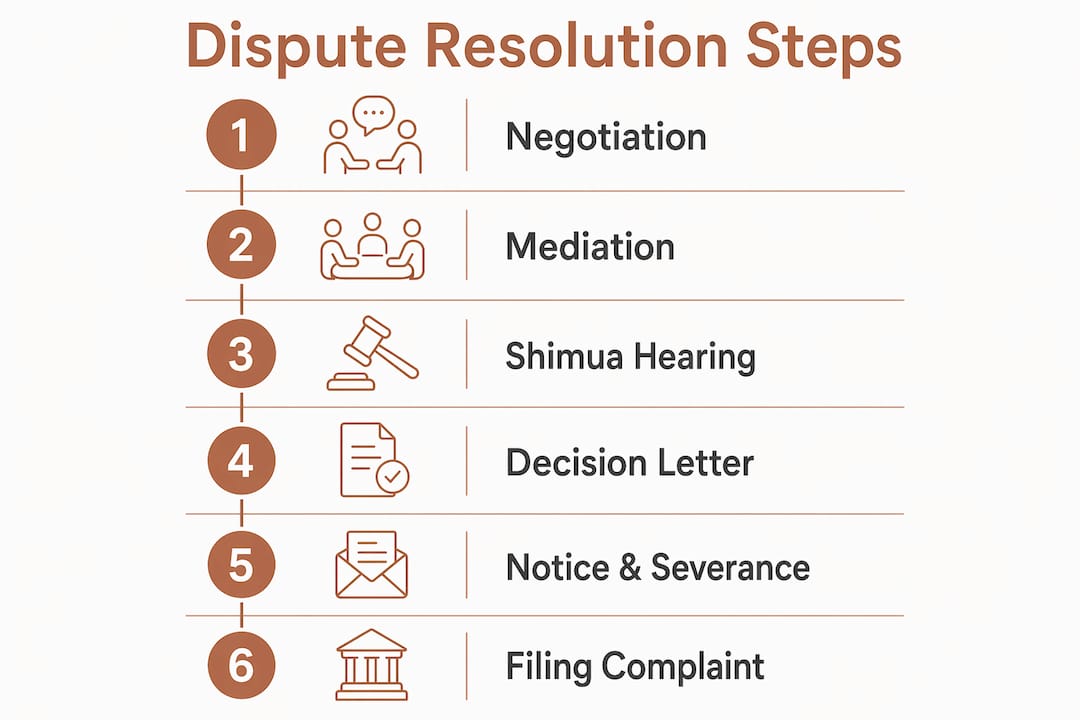
Él expat employment dispute steps in Israel follow a clear sequence. Skipping any step creates legal exposure for employers and can delay resolution for workers.
Step 1: Direct negotiation
The process begins with direct communication between the employee and employer. Legal counsel often sends a formal letter at this stage to signal seriousness and open the door to settlement. The Israeli labor dispute resolution framework treats negotiation as the preferred first step because it saves both parties time and legal costs.
Step 2: Mediation
If direct negotiation fails, mediation through a neutral third party is the next option. Mediation is not mandatory under Israeli law, but courts look favorably on parties who attempt it. A mediator helps both sides reach a voluntary agreement without the cost and delay of litigation.
Step 3: The shimua hearing
Él shimua is the most critical procedural step in any Israeli dismissal. It is a formal hearing that gives the employee a genuine opportunity to respond to the employer’s reasons for termination before a final decision is made. Employees typically receive 5–7 working days to respond to a shimua invitation. That window is not a formality. The employee must use it to present their case, and the employer must listen and document their reasoning.
The decision-maker conducting the shimua must be someone with actual authority to change the outcome. A hearing run by a manager who has no power to reverse the termination decision does not satisfy the legal requirement.
Step 4: Decision letter
After the shimua, the employer issues a written decision letter. This letter must reflect genuine consideration of what the employee said during the hearing. A letter that simply restates the original termination reason without engaging with the employee’s response is legally vulnerable.
Step 5: Statutory notice and severance
Israeli law requires employers to provide written notice of termination. The notice period length depends on how long the employee has worked for the company. Severance pay is also mandatory for employees dismissed after one year of service. These obligations cannot be waived by contract.
Step 6: Filing a complaint or lawsuit
If the dispute is not resolved through the steps above, the employee can file a complaint with the Ministry of Labor or bring a claim directly to the Regional Labor Court. The Israeli court system handles labor cases in dedicated Regional Labor Courts, with appeals going to the National Labor Court.
The standard termination workflow in Israel aims for process closure within about 30 days after the last working day. That timeline assumes all steps are followed correctly. Disputes that skip steps or involve contested facts take significantly longer.
Pro Tip: If you are an employer using an Employer of Record service in Israel, you remain indirectly liable if your termination instructions prevent the EOR from following mandatory procedures. Always confirm that the EOR has completed the shimua before the termination takes effect.
What special protections apply to foreign workers and expats in Israeli disputes?
Foreign workers hold the same statutory employment rights as Israeli nationals. This is not a courtesy. It is a legal requirement under Israeli labor law and the Foreign Workers Law.
The core protections include:
- Minimum wage. Foreign workers are entitled to the same minimum wage as Israeli employees, with no exceptions.
- Paid leave. Annual leave, sick leave, and holiday pay apply equally to foreign workers.
- Severance pay. Foreign workers dismissed after one year of service receive severance on the same terms as Israeli nationals.
- Pension contributions. Employers must make pension contributions for foreign workers as they would for any other employee.
- Accommodations and insurance. Employers of foreign workers must provide accommodations and medical insurance under the Foreign Workers Law. Failure to do so can result in criminal penalties.
One of the most important protections for foreign workers is the right to file wage complaints without automatic immigration consequences. Filing complaints with the Ministry of Labor does not trigger deportation or permit cancellation. That said, legal advice is essential before filing, because some situations carry indirect immigration risks that require careful handling.
Several NGOs in Israel provide legal aid and support to foreign workers navigating employment disputes. These organizations help workers understand their rights, prepare documentation, and connect with legal counsel when needed.
Pro Tip: If you are a foreign worker and your employer threatens immigration consequences for raising a wage complaint, document the threat in writing immediately. That threat itself may constitute retaliation under Israeli law.
Expat employers face a mirror-image challenge. They must comply with Israeli labor law even when their company is based abroad and the employment contract cites foreign law. Employees cannot waive core statutory rights under Israeli law, even if the contract explicitly states otherwise. Israeli labor courts treat such waivers as void. This applies to severance, notice periods, and the shimua hearing requirement.
What legal remedies can parties expect from the Israeli employment dispute process?
The Regional Labor Court has broad authority to remedy procedural and substantive violations. The outcome depends on what went wrong and how seriously the employer deviated from required procedures.
| Violation | Likely Remedy |
|---|---|
| Dismissal without a shimua hearing | Reinstatement or significant damages |
| Failure to pay severance | Court-ordered payment plus interest |
| Discriminatory termination | Damages under the Equal Opportunities Law |
| Unpaid wages or benefits | Full back-payment plus penalties |
| Retaliatory dismissal | Reinstatement and compensation |
Skipping the shimua hearing is the most common reason Israeli labor courts rule against employers. The court can nullify a dismissal on procedural grounds alone, even if the employer had a legitimate substantive reason for terminating the employee. That means an employer who had every right to fire someone can still lose in court simply by failing to run the hearing correctly.
Courts have awarded significant damages in illegal dismissal cases. One documented case resulted in 18 months of salary plus legal costs for an employee dismissed without proper procedure. That figure reflects how seriously Israeli courts treat procedural compliance.
Settlement remains an option at every stage of the process. Parties who reach a negotiated agreement avoid the cost and uncertainty of litigation. The Israeli labor dispute resolution system actively encourages settlement, and courts often refer parties to mediation before proceeding to a full hearing.
Employees cannot contractually give up their core statutory rights. A contract clause that says an employee waives their right to severance or to a shimua hearing is void under Israeli law. This protection holds even when the contract is governed by foreign law. Employers who rely on such clauses face the full range of court remedies as if the clause never existed.
Key Takeaways
The Israeli employment dispute process is a mandatory legal sequence that protects both workers and employers, and skipping any step, especially the shimua hearing, exposes employers to reinstatement orders and significant financial liability.
| Point | Details |
|---|---|
| Shimua hearing is mandatory | Courts can nullify any dismissal that skips or improperly conducts this hearing. |
| Foreign workers hold equal rights | Israeli law grants foreign workers the same wages, leave, severance, and pension protections as nationals. |
| Statutory rights cannot be waived | Contract clauses waiving severance or notice periods are void in Israeli labor courts. |
| Negotiation comes first | Direct negotiation and mediation are the preferred first steps before any court filing. |
| Procedural violations carry real costs | Courts have awarded 18 months of salary plus legal costs for illegal dismissal cases. |
What working with Israeli employment disputes has taught us
After handling employment disputes for international clients across many industries, one pattern stands out clearly: most cases that end badly for employers were preventable. The shimua hearing is almost always the breaking point. Employers either skip it entirely, run it as a formality with no real decision-making authority in the room, or fail to document what was said. Israeli labor courts see through all three approaches immediately.
The other consistent mistake is assuming that a foreign-law employment contract provides protection against Israeli statutory obligations. It does not. We have seen multinational companies discover this the hard way after assuming their contracts, drafted under another country’s legal system, would shield them from Israeli severance or notice period requirements. They do not.
For foreign workers, the fear of immigration consequences keeps many people from asserting rights they are fully entitled to. That fear is understandable, but it is often misplaced. Filing a wage complaint with the Ministry of Labor does not automatically put your visa at risk. What matters is getting proper legal advice before you file, so you understand the full picture and can act with confidence.
Early legal advice is the single most effective way to avoid a costly dispute. Whether you are an employer planning a termination or an employee who believes your rights have been violated, getting counsel before you act gives you options. Waiting until after the fact leaves you with far fewer.
— Menora Law
Menora Law’s approach to Israeli employment disputes
Resolving an employment dispute in Israel requires more than knowing the law. It requires knowing how Israeli labor courts think, what procedural missteps they penalize most severely, and how to position your case for the best possible outcome.
Menora Law works with both employees and employers, including foreign nationals and international companies, on Israeli employment matters. The firm handles cases remotely, which means clients based outside Israel receive the same quality of representation as those on the ground. From reviewing termination procedures to representing clients in the Regional Labor Court, Menora Law provides direct, experienced legal support at every stage of the process. If you are facing a workplace conflict in Israel or want to make sure your procedures are legally sound, contact Menora Law to discuss your situation with an attorney who knows Israeli labor law inside and out.
Preguntas más frecuentes
What is the shimua hearing in Israeli employment law?
Él shimua is a mandatory pre-termination hearing that gives employees a formal right to respond before dismissal. Israeli courts can nullify any dismissal that skips or improperly conducts this hearing, regardless of whether the underlying reason for termination was valid.
Can a foreign worker file an employment complaint in Israel?
Yes. Foreign workers hold the same statutory rights as Israeli nationals and can file wage or labor complaints directly with the Ministry of Labor. Filing a complaint does not automatically trigger deportation or permit cancellation, but legal advice is recommended before taking that step.
How long does the Israeli employment dispute process take?
The standard termination workflow aims for closure within about 30 days after the last working day when all steps are followed correctly. Disputed cases that proceed to the Regional Labor Court take significantly longer depending on complexity.
Can an employment contract waive Israeli statutory rights?
No. Israeli labor courts treat any contractual waiver of core statutory rights, including severance pay and notice periods, as void. This applies even when the contract is governed by foreign law.
What remedies does the Israeli labor court award for illegal dismissal?
The court can order reinstatement, back pay, damages, and legal costs. One documented case resulted in 18 months of salary plus legal costs for an employee dismissed without proper procedure.


 English
 Afrikaans
 العربية
 বাংলা
বাংলা Čeština
 简体中文
简体中文 Nederlands
 Suomi
Suomi Français
 Deutsch
 עִבְרִית
 हिन्दी
 Magyar
 Italiano
 日本語
日本語 한국어
한국어 Polski
 فارسی
فارسی Português do Brasil
 Русский
 Español de México
 Українська