
Yes, before you sign anything, run a full, Israel-specific real estate due diligence covering title, planning, engineering, municipal, and counterparty checks. Bring in a real-estate lawyer early to pull the Tabu extract, coordinate inspections, and translate what your team finds into contract language before money changes hands.
TL;DR:
- Conducting a full due diligence process in Israel requires separate investigations into legal title, permits, physical condition, municipal debts, and contractual reliability, all running in parallel.
- Pulling the Tabu land registry record is the first step to verify ownership, encumbrances, and potential liens, especially for properties with complex ownership structures or unregistered properties.
- Planning and permit checks reveal unauthorized construction or violations that can diminish resale value, with unresolved violations potentially halting mortgage approval or future sales.
- A professional engineering inspection is essential for older or heavily renovated properties to identify structural issues or damages that are costly to repair post-sale.
- Early coordination of legal, engineering, and municipal searches, preferably through remote legal support, reduces delays, ensures contractual protection, and avoids costly mistakes for overseas buyers.
What Does Real Estate Due Diligence in Israel Actually Cover?
A proper בדיקת נאותות נדל״ן בישראל is not one inspection. It’s five separate investigations that need to happen roughly in parallel: legal title, planning and permits, physical condition, municipal and tax exposure, and counterparty reliability. Skip one and you’ve left a gap that a seller’s lawyer will exploit later, or worse, a defect you’ll discover after the wire transfer clears.
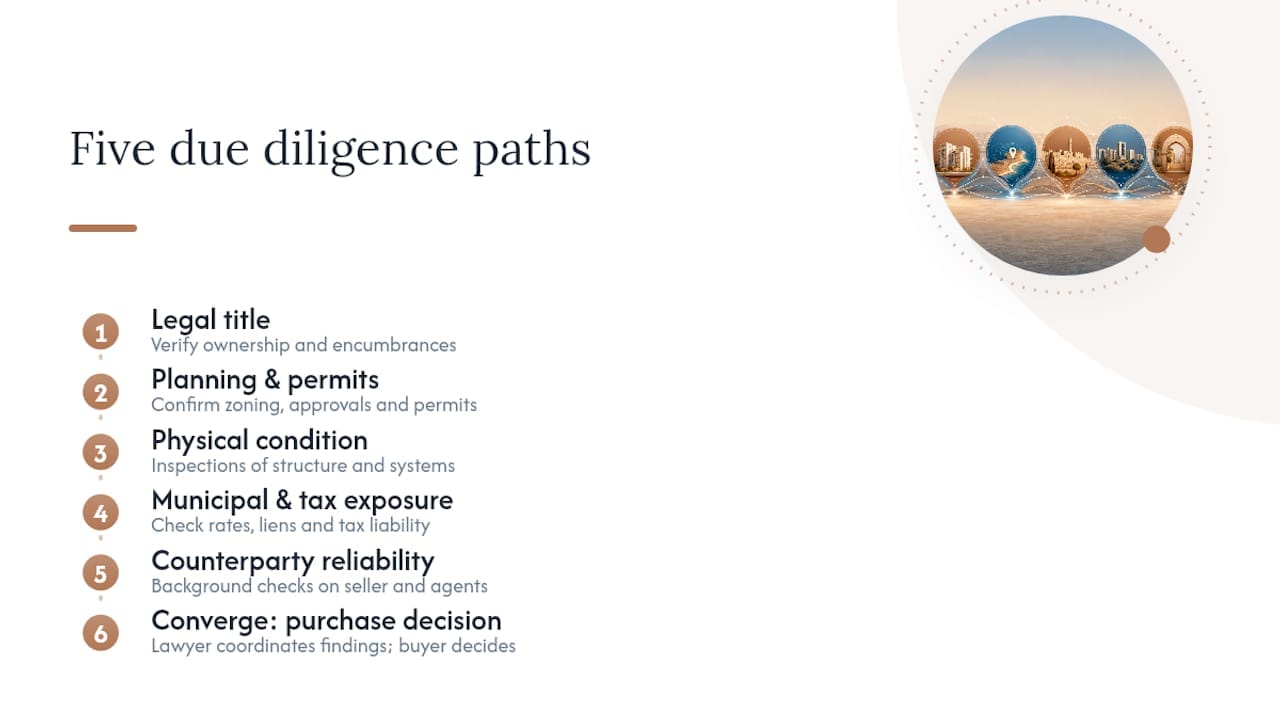
Israeli courts generally treat due diligence as the buyer’s responsibility, not a legal mandate. That distinction has teeth: if you never asked for a document the seller would have handed over, a judge may later find you failed to act as a reasonable buyer, which can limit your claims if something goes wrong. Industry guides frame this checklist as running across legal, physical, financial, and planning domains, and that framing holds whether you’re buying a Tel Aviv apartment or a commercial building in Herzliya.
For overseas buyers, the practical challenge multiplies. You’re not just verifying a title. You’re doing it from another time zone, in a language you may not read, against a seller who has home-court advantage. That’s exactly where a lawyer coordinating the process on your behalf earns its cost.
Legal and Title Checks: How to Read Tabu and Spot Encumbrances
Every Israeli property has (or should have) a record in the Israel Land Registry, known as Tabu. Pulling this extract is the first move, and it tells you who legally owns the property, whether a mortgage sits against it, and whether any liens, cautionary notes, or third-party rights are registered.
Some properties complicate this picture. A unit still registered under the name of a construction company, rather than the individual seller, needs an extra ownership chain check. Properties built on land controlled by the Autoridad de Tierras de Israel operate under leasehold arrangements rather than freehold ownership, which changes what “buying” the property actually means. And a number of older properties, especially in smaller towns, were never formally registered in Tabu at all, leaving buyers to rely on older deeds and municipal records instead.
Watch for these red flags before you commit:
- An unrecorded or informally released mortgage that could resurface after closing
- A seller who lacks documented authority to sell, such as an estate not yet settled through probate
- Protective rights held by a spouse, co-owner, or family member that were never removed from the file
When any of these show up, don’t just note them. Push for conditions precedent in the contract, written seller representations confirming clean title, or an escrow arrangement that holds funds until the registrar confirms transfer. A legal due diligence guide focused on Israeli transactions is blunt about this: failing to check the Tabu thoroughly can undermine your legal position if a dispute follows.
How Do You Verify Building Permits and Spot Unauthorized Construction?
Planning status is where deals quietly fall apart. Start with the local municipality’s building department (the va’adah lokalit) and its online planning portal, where you can pull the permit file (heter bniya) and compare it against the property as it actually stands.
The mismatch between what was permitted and what was built is the single most common problem inspectors flag. Watch for:
- Extended balconies, added rooms, or converted storage space that never appear in the permit file
- Structures built without any permit at all, particularly in older buildings or converted rooftop units
- Open demolition or stop-work orders sitting unresolved in the municipal file
Unauthorized construction isn’t a paperwork technicality. Banks routinely decline mortgages on properties with unresolved permit violations, and a future buyer’s lawyer will flag the same issue you’re flagging now, shrinking your resale pool. Industry coverage treats planning risk as one of the leading sources of surprise in Israeli transactions, which is why bringing in a planning specialist early, not after signing, matters so much.
Once you have findings, put them to work. Demand the seller resolve the violation before closing, negotiate a price reduction tied to estimated legalization costs, or write in a clean withdrawal right if the municipality won’t retroactively approve the work. For a deeper walkthrough of the legal mechanics, Menora Law’s guide on verifying zoning and building rights covers the process step by step.
What Should a Physical Inspection (Bedek Bayit) Include?
A standard bedek bayit is a general walkthrough checking obvious wear: water stains, cracked tile, aging fixtures. It’s useful, but it’s not the same as a structural survey. Anything older, heavily renovated, or with visible cracking needs a licensed engineer, not just a general inspector.
The engineer’s job is to flag what a casual walkthrough misses: structural cracks that suggest foundation movement, chronic damp that points to a failing waterproofing membrane, outdated electrical panels that won’t pass a safety review, and roof or foundation issues that are expensive to fix and easy to hide behind fresh paint.
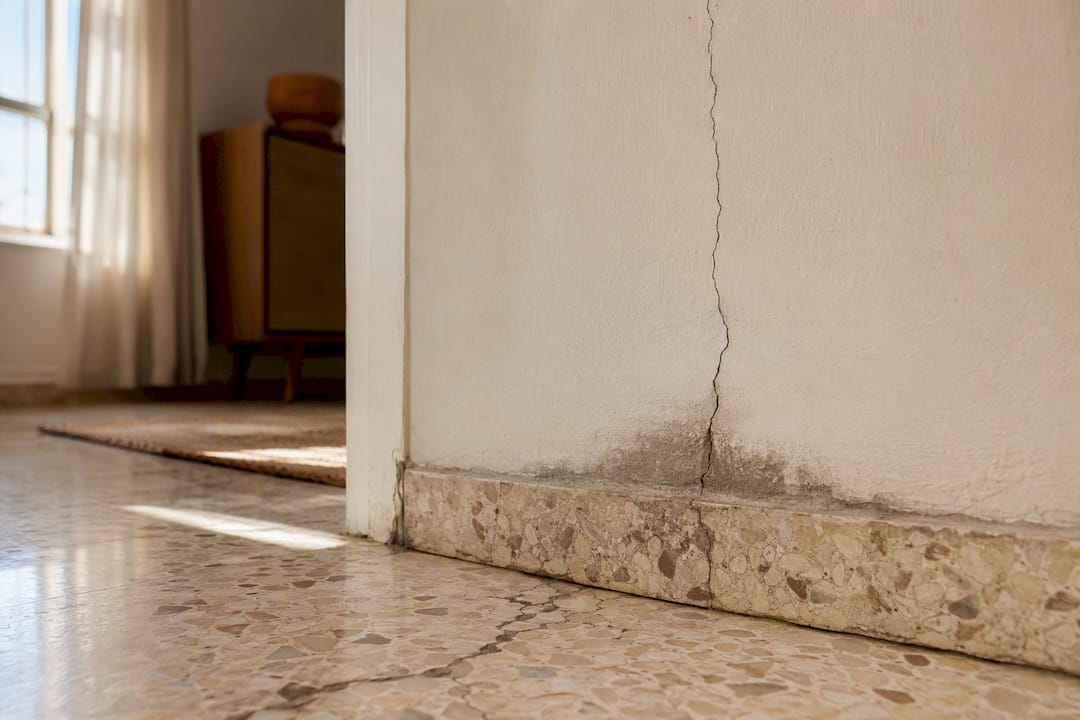
Statistic Callout: A professional inspection typically costs a small fraction of what unaddressed structural or moisture damage runs to repair after purchase, which is why inspections are strongly recommended for older properties in particular.
Pro Tip: Order the engineering inspection before you finalize price, not after. A report showing $15,000 in needed repairs is a negotiating tool before signing and a lawsuit waiting to happen after.
Once the report is in hand, you have three real options: hold the repair cost in escrow, require the seller to fix it before closing, or renegotiate the price to reflect what you’re inheriting.
Municipal and Tax Checks: What Costs Follow the Property?
Every Israeli property carries a municipal tax history, and you need it in writing before closing, not as a verbal assurance from the seller.
Request a arnona (municipal property tax) clearance certificate confirming no outstanding debt, since unpaid arnona can attach to the property regardless of who racked it up. Ask specifically about betterment levies (hetel hashbacha), a charge some municipalities apply after a rezoning or permit approval increases property value, sometimes billed to whoever owns the property when the levy is assessed, not who owned it when the change occurred.
Budget for these costs beyond the purchase price:
- Purchase tax (mas rechisha), which scales with price and buyer status
- Potential seller-side capital gains exposure, which sometimes becomes a negotiating point on price
- Legal, appraisal, and registration fees tied to closing
Fold every municipal and tax finding into your investment model before you commit, not after you’ve already signed a memorandum of understanding.
Who Is the Seller, and What Do the Contracts Actually Say?
Confirm the seller’s identity and legal capacity before anything else, and demand additional signatories or formal releases if the property sits in an estate, a divorce settlement, or under joint ownership.
- Verify the seller’s identity matches the Tabu record exactly, including corporate registration if the seller is a company.
- Review any existing lease for assignment clauses, protected-tenant status, current rent, and early-termination rights.
- Search for pending litigation, liens, or bankruptcy proceedings that could block or delay transfer.
- Insist on escrow, seller indemnities, and written representations and warranties as standard contract terms.
Commercial buyers face an extra layer here. Due diligence on income-producing property typically folds in lease review, safety-system compliance, and financial modeling using NOI and cap rate, on top of everything above. Menora Law’s guide to reviewing Israeli real estate contracts breaks down which clauses actually protect a foreign buyer.
What’s the Realistic Timeline for a Full Due Diligence?
Sequence matters here almost as much as thoroughness. Run the Tabu check first, since it’s fast and can disqualify a property outright. Then submit an offer with due diligence conditions attached, order the engineering inspection, search planning and permit files, verify municipal debts, and only then move to contract negotiation and closing.
- Preliminary Tabu pull and location confirmation: 1 to 3 days
- Conditional offer with due diligence clauses attached: same week
- Engineering inspection and planning/permit file review: 1 to 2 weeks, run in parallel
- Municipal and tax clearance checks: 3 to 5 business days
- Contract negotiation incorporating findings, then closing: 2 to 4 weeks
Build in buffer time everywhere, since municipal offices and permit archives in Israel move on their own schedule. If any step surfaces a serious defect, you have three real choices: renegotiate price, require repairs and hold funds in escrow until they’re done, or walk away using a contract’s withdrawal clause.
Pro Tip: Treat your lawyer as the conductor of this whole process, not just the person who reviews the final contract. Coordinating the engineer, the municipal search, and the Tabu pull as one workflow helps ensure findings are considered together rather than appearing piecemeal after concessions.
How Menora Law Supports Buyers Through the Process
Legal services for Israeli real estate transactions often include contract drafting, title verification, and coordination with engineers and municipal offices.
- Real estate contract preparation with conditions precedent built in
- Coordination of Tabu pulls, planning searches, and inspection scheduling
- Remote representation, so overseas buyers never need to fly to Israel for signing or negotiation
Remote workflows using video calls, digital document review, and power-of-attorney arrangements can handle most steps traditionally requiring travel.
Menora Law’s Perspective: Common Mistakes We See Buyers Make
The biggest mistake is sequencing. Buyers often order the engineering inspection before confirming the Tabu is clean, wasting money on a property that legally can’t close. The second is treating due diligence as a formality rather than negotiating leverage. The third is skipping the lawyer until the contract is nearly final. Bring one in at the offer stage, and every finding lands in the contract itself, not in a regretful phone call after signing.
— Menora Law
Ready to Protect Your Purchase in Israel?
Using a legal representative to coordinate the Tabu pull, engineer inspections, and contract negotiations can avoid the need for travel and simplify time-zone challenges for overseas buyers. Clients can expect title verification, documented planning and permit status, and contract language designed to protect them if issues arise after signing.

If you’re planning to buy real estate in Israel, whether it’s an apartment for personal use or an investment property, get in touch with our real estate law team before you sign a memorandum of understanding. That’s the point in the process where our involvement saves the most money and the most stress.
Sources
- בדיקות לפני קניית דירה: מה חובה לוודא לפני שחותמים | רימקס בעיר
- בדיקת נאותות נדל"ן – כך תוודאו שאתם קונים נכון – איגוד הנדלן
- בדיקת נאותות בעסקאות מקרקעין: המדריך המשפטי המלא לרוכשים ומוכרים
- A-nadlan
This article is general information, not a substitute for advice from a qualified lawyer. Consult a qualified legal professional about your own circumstances before acting on anything here.
Preguntas más frecuentes
What Is Due Diligence in Israeli Real Estate?
It’s a set of checks covering legal title, planning and permits, physical condition, municipal debts, and counterparty reliability, run before you sign a purchase contract. Israeli courts expect buyers to conduct reasonable due diligence on their own initiative, since it isn’t mandated by statute.
How Long Does a Full Property Due Diligence Take in Israel?
A thorough review typically takes several weeks from the initial Tabu pull through contract signing, depending on how quickly municipal offices respond. Complex cases involving unresolved permits or contested ownership can run longer.
Do I Need a Lawyer to Buy Property in Israel as a Foreigner?
You’re not legally required to hire one, but coordinating title checks, permit searches, and contract drafting from overseas without local legal support is a significant risk. Some legal practices represent international buyers remotely, handling the process without requiring travel to Israel.
What Happens if Unauthorized Construction Is Found After I’ve Signed?
Your options narrow considerably once the contract is signed, which is exactly why the engineering and planning checks need to happen before that point. If a defect surfaces later, remedies depend entirely on what representations and conditions were written into your original contract.
What Does Menora Law Charge for Real Estate Due Diligence Services?
Menora Law’s real estate transaction and contract services are priced per engagement, and current fees are available directly through the firm’s real estate practice page. Pricing depends on the scope of checks required and whether the buyer needs full remote representation.
Recommended
- Israeli Real Estate Contract Review: A Foreign Buyer’s Guide
- Israeli Lawyer Tips: How To Easily Buy Land In Israel As A Foreigner According To Land Law In Israel?
- Israeli Real Estate Law: What Buyers And Investors Must Know
- Buying Real Estate In Israel – 30 Tips To Navigate Better The Israeli Property Market

 English
 Afrikaans
 العربية
 বাংলা
বাংলা Čeština
 简体中文
简体中文 Nederlands
 Suomi
Suomi Français
 Deutsch
 עִבְרִית
 हिन्दी
 Magyar
 Italiano
 日本語
日本語 한국어
한국어 Polski
 فارسی
فارسی Português do Brasil
 Русский
 Español de México
 Українська