
TL;DR:
- Israeli class actions unite individuals harmed by similar conduct into a single lawsuit under strict procedural and statutory rules. All eligible members are automatically included unless they opt out within 45 days, with claims limited to specific sectors listed in the law. Court approval of settlements ensures fairness, with the certification stage serving as a rigorous gatekeeper before full trial proceedings.
An Israeli class action lawsuit is a civil proceeding brought under the Class Actions Law, 5766-2006, where a single representative plaintiff sues on behalf of a group sharing common questions of fact or law, without needing prior authorization from every group member. This mechanism allows individuals harmed by the same conduct, whether a bank overcharge, a consumer fraud scheme, or a privacy violation, to pool their claims into one proceeding. The law establishes a two-stage process: first, the court must certify the lawsuit as a class action, and then, if certified, the case proceeds to a trial on the merits. All class members are bound by the outcome unless they actively opt out within a defined window. Understanding this framework is the starting point for anyone considering or facing this type of litigation in Israel.
What is an Israeli class action lawsuit?
An Israeli class action lawsuit is defined as a civil claim filed by a representative plaintiff on behalf of a group of people who share a common legal or factual grievance, governed exclusively by the Class Actions Law, 5766-2006. The representative plaintiff does not need the consent of every group member to initiate the lawsuit. This is one of the most distinctive features of the Israeli system compared to other collective litigation models.

The law requires that the claims of all group members share common questions of fact or law. A bank that charges unauthorized fees to thousands of customers, for example, creates a common factual basis that can support a class action. The representative plaintiff must also demonstrate that they can adequately represent the interests of the entire group throughout the litigation.
The opt-out mechanism is a defining feature of Israeli class actions. Once the court certifies the lawsuit, all eligible class members are automatically included unless they formally opt out within 45 days of receiving notice. This means that even people who never heard of the lawsuit may be bound by its outcome if they do not act within that window. The practical effect is that class actions in Israel can represent very large groups without requiring each member to take any affirmative step to join.
The Israeli civil litigation process treats the certification stage as a substantive filter, not just a procedural formality. Courts examine whether the claim genuinely serves the public interest and whether the class mechanism is the most appropriate way to resolve the dispute. This public interest focus sets Israeli class action law apart from purely private litigation models.
What is the legal process for filing a class action in Israel?
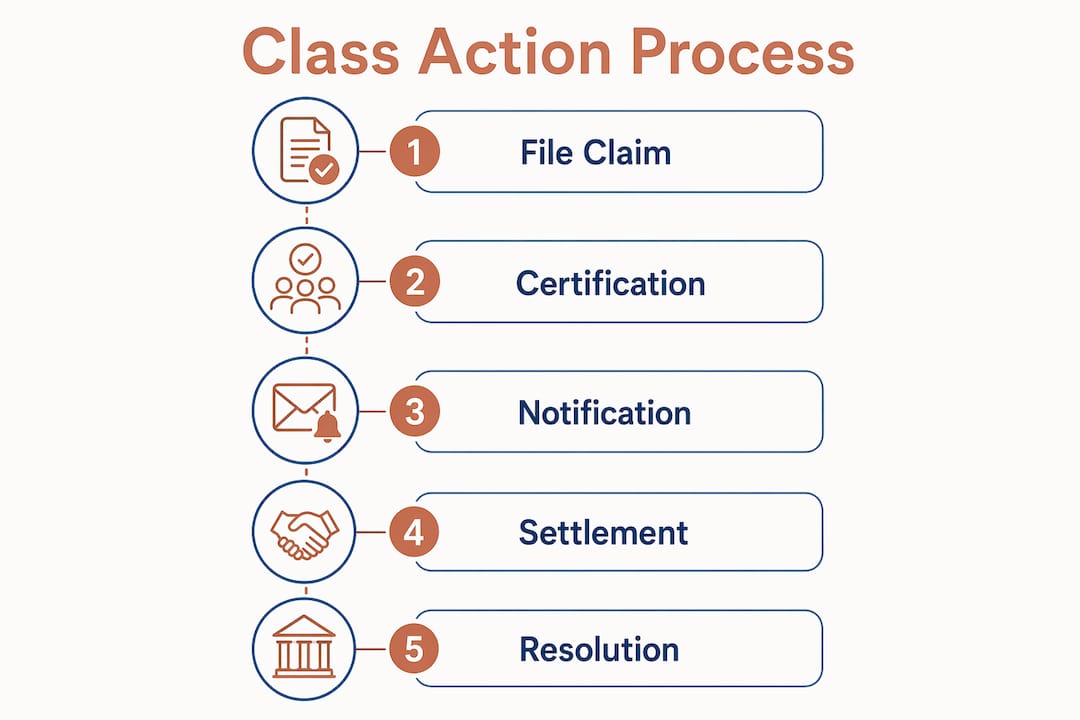
The class action lawsuit process in Israel follows a structured, two-stage path that begins long before any court ever rules on the underlying merits of the claim. Each stage carries its own procedural requirements, deadlines, and evidentiary burdens.
Stage one: Filing the certification motion
- The representative plaintiff files a certification motion with the relevant court, supported by evidence establishing the common questions of fact or law, the size of the group, and the suitability of the representative plaintiff.
- The respondent (the defendant) has 90 days to respond to the certification petition. This timeline is fixed and cannot be extended without court approval.
- The representative plaintiff then has 30 days to file a reply to the respondent’s response.
- Strict page limits apply throughout. Certification motions and responses are capped at 30 pages, while replies are limited to 5 pages. These limits force lawyers to present their strongest arguments concisely, which raises the quality of pleadings but also creates real pressure on litigants unfamiliar with the system.
- The court holds a hearing and may request additional evidence before issuing its certification decision.
Stage two: Trial on the merits
- If the court grants certification, the case proceeds to a full trial on the merits. The class is formally defined, and notice is sent to all class members explaining their right to opt out.
- The trial examines the substantive legal claims and determines liability and remedies for the entire class.
The certification stage acts as a strict gatekeeper, often requiring as much preparation and evidentiary work as a full trial. Courts assess whether the claim has merit, whether the class mechanism serves the public interest, and whether the representative plaintiff is genuinely suitable. Many cases settle or are withdrawn at this stage precisely because the evidentiary burden is so demanding.
Pro Tip: Prepare your certification motion as thoroughly as you would prepare for a full trial. Courts in Israel treat the certification hearing as a substantive review, not a rubber stamp. Weak evidentiary preparation at this stage is the most common reason class actions fail before they ever reach the merits.
The procedural strictness of the Israeli class action framework reflects a deliberate policy choice. The legislature designed the certification stage to protect defendants from meritless mass litigation while still giving genuine claimants a powerful tool for collective redress. For anyone considering how to file a class action in Israel, understanding this balance is critical from day one.
Which types of claims are eligible for a class action in Israel?
Israeli class action law does not allow class actions for every type of legal claim. Eligible causes of action are limited by statute to those listed in the Second Addendum to the Class Actions Law, 2006. This statutory restriction is one of the most important features of the legal framework class action Israel operates under, and it is frequently misunderstood by potential plaintiffs.
The main sectors covered by the Second Addendum include:
- Consumer protection: Claims involving deceptive trade practices, false advertising, or unauthorized charges by businesses selling goods or services to the public.
- Banking and financial services: Unauthorized fees, improper interest calculations, or misleading financial product disclosures by banks and financial institutions.
- Securities law: Misrepresentations in prospectuses, insider trading, or market manipulation affecting investors.
- Labor law: Wage theft, unlawful deductions, or failure to provide statutory benefits to employees.
- Accessibility: Violations of accessibility requirements under Israeli law affecting people with disabilities.
- Privacy violations: Unauthorized use or disclosure of personal data by companies or public bodies.
Claims that fall outside the Second Addendum cannot be certified as class actions, regardless of how many people were harmed. A plaintiff with a valid personal claim in an ineligible area must pursue individual litigation or consider a group action instead.
The table below compares class actions and group actions under Israeli law to clarify which mechanism applies in different situations:
| Feature | Class action | Group action |
|---|---|---|
| Participation mechanism | Opt-out (automatic inclusion) | Opt-in (active joining required) |
| Binding effect | Binds all members unless opted out | Binds only those who actively joined |
| Eligible claims | Limited to Second Addendum sectors | Broader range of claims |
| Representative plaintiff | Required | Not required in same way |
| Court oversight of settlement | Mandatory and rigorous | Less formalized |
The distinction matters practically. If your claim falls within the Second Addendum, a class action gives you the power of automatic group inclusion and a binding court decision. If it falls outside, a group action may still be available but requires each affected person to take affirmative steps to participate, which typically results in smaller groups and less leverage.
How are settlements and resolutions managed in Israeli class actions?
Most Israeli class actions resolve through settlements or withdrawals rather than full trials on the merits, with approximately 70% of cases concluding this way. This statistic reflects a practical reality: the certification stage creates enormous pressure on both sides to negotiate, and many defendants prefer a controlled settlement over the uncertainty of a full trial.
The settlement approval process in Israel is not a private matter between the parties. Court-monitored settlements require public notice, a formal approval hearing, and an opportunity for class members and regulatory authorities to raise objections. The court examines whether the settlement is fair, reasonable, and in the public interest before approving it. This level of judicial oversight is designed to prevent collusive settlements that benefit the representative plaintiff and their lawyers at the expense of the broader class.
Key features of the settlement process include:
- Public notice: The proposed settlement must be publicized so that class members can review its terms and decide whether to object or opt out.
- Objection rights: Any class member, as well as the Attorney General and relevant regulatory authorities, may file objections to the proposed settlement terms.
- Court scrutiny: The court applies a high standard, considering fairness, reasonableness, and public interest before granting approval. A settlement that appears favorable on paper but leaves class members with inadequate compensation will not pass this test.
- Remedy allocation: Approved settlements may provide monetary compensation distributed directly to class members, or in some cases, direct payments to public causes or charities where individual distribution is impractical.
There is an important distinction between a settlement and a withdrawal. A withdrawal means the representative plaintiff abandons the lawsuit, which also requires court approval to prevent abuse. A settlement resolves the dispute on agreed terms and binds all class members who did not opt out. The court treats these two outcomes very differently, and the approval criteria for each are distinct.
Pro Tip: If you are a class member who receives a settlement notice, read it carefully before the objection deadline. You have the right to object to the terms or opt out entirely. Many class members ignore these notices and lose their opportunity to protect their individual interests.
The active role of the Attorney General in Israeli class action settlements is worth noting. The Attorney General can intervene in any class action that touches on significant public interests, and their involvement often shapes the final settlement terms. This is particularly common in cases involving government agencies, large financial institutions, or widespread consumer harm.
What are the differences between class actions and group actions in Israel?
The distinction between class and group actions has direct strategic consequences for anyone considering collective litigation in Israel. These are not interchangeable terms, and choosing the wrong mechanism can undermine an otherwise valid claim.
The core difference lies in participation and binding effect. In a class action, all eligible members are automatically included once the court certifies the lawsuit. They are bound by the outcome unless they opt out within the 45-day window following certification notice. In a group action, each member must actively choose to join. Those who do not join are not bound by the court’s decision, and they retain the right to pursue their own individual claims later.
| Feature | Class action | Group action |
|---|---|---|
| Default membership | Automatic (opt-out required to leave) | No automatic membership |
| Binding on non-participants | Yes, unless opted out | No |
| Opt-out window | 45 days from certification notice | Not applicable |
| Strategic leverage | Higher (larger group, stronger position) | Lower (smaller group, individual claims preserved) |
From a litigation strategy perspective, class actions carry significantly more leverage against defendants. A defendant facing a class action that binds thousands of customers has far greater financial exposure than one facing a group action with a handful of active participants. This is why defendants often fight certification aggressively and why the certification stage is so heavily contested.
For plaintiffs, the automatic inclusion mechanism means that the representative plaintiff and their legal team carry the weight of the litigation on behalf of people who may not even be aware the lawsuit exists. This creates a responsibility to represent the class faithfully and a strong incentive for courts to scrutinize the representative plaintiff’s suitability carefully.
Understanding this distinction is particularly relevant for foreign individuals or companies involved in Israeli disputes. If you are a class member in an Israeli class action, you may be bound by a court decision without ever having taken any action in the proceedings. Staying informed and knowing your opt-out rights is the only way to protect your individual position.
Key takeaways
Israeli class actions are governed exclusively by the Class Actions Law, 5766-2006, which restricts eligible claims to sectors listed in the Second Addendum, mandates a two-stage certification and merits process, and binds all class members by default unless they opt out within 45 days.
| Point | Details |
|---|---|
| Governing law | The Class Actions Law, 5766-2006 defines all procedures, eligibility, and binding effects. |
| Two-stage process | Certification must be granted before any trial on the merits can proceed. |
| Opt-out window | Class members have 45 days from certification notice to opt out or they are bound by the outcome. |
| Eligible sectors | Claims must fall within the Second Addendum, covering consumer protection, banking, securities, labor, and more. |
| Settlement prevalence | Approximately 70% of Israeli class actions resolve through settlements or withdrawals, not full trials. |
What working with Israeli class actions has taught us
From our experience at Menora Law working with international clients on Israeli legal matters, the single biggest mistake people make with class actions is underestimating the certification stage. Most people assume that if their underlying claim is strong, certification is a formality. It is not. Israeli courts treat certification as a substantive review of the claim’s merit, its suitability for class treatment, and its public interest value. We have seen well-founded claims fail at certification simply because the motion was not prepared with the same rigor as a full trial brief.
The procedural strictness of the system, particularly the page limits and fixed timelines, catches foreign litigants off guard. Thirty pages sounds like plenty of space until you are trying to establish a class of thousands of affected consumers while also demonstrating your own suitability as a representative plaintiff. Every word has to earn its place.
On the settlement side, the court oversight process is genuinely protective of class members, but only if those members engage with it. We consistently advise clients who receive settlement notices to read them carefully and consult a lawyer before the objection deadline. The right to object is real and meaningful, but it expires quickly.
For overseas clients, the opt-out mechanism deserves particular attention. If you have ever been a customer of an Israeli bank, telecom company, or consumer business, there is a real possibility that a class action affecting your account has been certified without your knowledge. The 45-day opt-out window does not pause because you live abroad. Staying connected to Israeli legal developments, or working with a firm that monitors them for you, is the practical solution.
— Menora Law
How Menora Law can help with your Israeli legal matters
Menora Law works with international clients who need trusted, experienced representation in Israeli legal proceedings, including complex civil litigation matters.
Whether you are a potential plaintiff evaluating a claim, a business facing a class action, or a foreign individual trying to understand your rights under Israeli law, Menora Law provides clear legal guidance and hands-on support from attorneys who know the Israeli system inside and out. The firm handles cases remotely for overseas clients, with fast communication and legal strategies tailored to your specific situation. Explore Menora Law’s Israeli legal expertise and see how the firm’s internationally focused approach can work for you. For broader context on Israeli legal matters affecting foreign clients, the Israeli inheritance law guide is a strong example of the firm’s depth and clarity across practice areas.
שאלות נפוצות
What is the Class Actions Law, 5766-2006?
The Class Actions Law, 5766-2006 is the primary Israeli statute governing class action lawsuits. It defines eligible claims, establishes the two-stage certification and merits process, and sets out the opt-out mechanism that binds all class members by default.
How long does the certification process take in Israel?
The certification process timeline varies, but respondents have 90 days to respond to a certification petition, followed by a 30-day reply period. Court hearings and decisions add additional time, meaning certification alone can take well over a year in complex cases.
Can foreign individuals participate in or opt out of Israeli class actions?
Yes. Foreign individuals who are class members in a certified Israeli class action are bound by the outcome unless they opt out within the 45-day window following certification notice. Living abroad does not extend this deadline.
What types of claims qualify for a class action in Israel?
Claims must fall within the sectors listed in the Second Addendum to the Class Actions Law, 2006, which covers consumer protection, banking, securities, labor law, accessibility, and privacy violations, among others. Claims outside this list are not eligible for class certification.
What happens if a class action settles in Israel?
Settlements require court approval after public notice and an opportunity for objections from class members, the Attorney General, and relevant regulators. The court applies standards of fairness, reasonableness, and public interest before approving any settlement agreement.


 English
 Afrikaans
 العربية
 বাংলা
বাংলা Čeština
 简体中文
简体中文 Nederlands
 Suomi
Suomi Français
 Deutsch
 עִבְרִית
 हिन्दी
 Magyar
 Italiano
 日本語
日本語 한국어
한국어 Polski
 فارسی
فارسی Português do Brasil
 Русский
 Español de México
 Українська