
Sde Dov in Tel Aviv is a former municipal airport now being rebuilt into a 1,450 to 1,500-dunam coastal district with roughly 16,000 planned housing units. The practical choice facing buyers isn’t whether Sde Dov is worth watching. It’s whether you buy inside the district early and accept construction timelines, or buy adjacent to it in an established neighborhood and pay a premium for certainty.
- দ approved district masterplan covers about 1,500 dunams, with roughly 16,000 housing units split across three zones.
- The Eshkol zone is furthest along, with first occupancy expected around 2029.
- Buying early inside Sde Dov means construction risk and specification uncertainty. Buying adjacent in the Old North or near Tzameret Park means paying more upfront for a finished product and immediate livability.
Key Takeaways
Sde Dov’s redevelopment turns a former 1,450 to 1,500-dunam airport into roughly 16,000 planned housing units, but buyers need to weigh early-phase pricing against construction risk and verify every claim against official permit records.
| Point | Details |
|---|---|
| Masterplan scope | TA/4444 covers approximately 1,500 dunams with around 16,000 housing units across three zones. |
| Eshkol zone leads construction | First occupancy in Eshkol is targeted around 2029, ahead of Central and Northern zones. |
| Named developers active | Aura, Africa Israel, Tidhar, Gindi, and Israel Canada have won plots or launched marketing in the district. |
| Verify permits independently | Cross-check every developer claim against filings on the Mavat planning portal before signing. |
| Legal review before deposits | Have Israeli counsel review reservation agreements and escrow terms before any money changes hands. |
What Is Tel Aviv Sde Dov and Why Does It Matter Now?
Sde Dov is the name of both the old airport and the 1,450 to 1,500-dunam site now being converted into one of Tel Aviv’s largest planned residential districts. For decades it was a working airfield hemmed in by the Mediterranean coastline, the Yarkon River, and some of the city’s most established neighborhoods. That geography is exactly why the redevelopment matters: there’s almost no other stretch of contiguous coastal land left in Tel Aviv this size, and once it’s built out, there won’t be another opportunity like it.
The site’s history explains a lot about today’s zoning constraints, environmental review requirements, and the phased tender structure buyers keep running into. Understanding that background helps you read the current development status with the right context.
- Sde Dov airport occupied a coastal strip bordered by Ramat Aviv, the Old North, and the sea.
- Its closure freed up land that had been off-limits to residential development for over 80 years.
- The redevelopment is now one of the few large-scale, single-authority-controlled land releases in the city.
When Did Sde Dov Airport Close and Why?
Sde Dov Airport opened in September 1938, originally serving as both a civilian airfield and, for periods of its operating life, a facility used by the Israeli Air Force. For decades it handled domestic flights connecting Tel Aviv to destinations like Eilat and served as a convenient in-city alternative to Ben Gurion Airport, right up until commercial pressure and urban planning priorities caught up with it.
The airport ceased operations on June 30, 2019, ending an 81-year run. The shutdown wasn’t sudden. It followed years of public debate over noise, safety buffers so close to dense residential blocks, and the sheer opportunity cost of holding prime coastal land as a runway while Tel Aviv’s housing shortage worsened.
- Opened: September 23, 1938.
- Closed: June 30, 2019, after a multi-year planning and evacuation process.
- The closure decision was driven by land-use economics as much as aviation logistics. A city starved for housing land had little patience for a low-density airfield sitting on the waterfront.
What Does the Sde Dov Masterplan Actually Include?
The governing document is district masterplan TA/4444, and it lays out a program most cities would take a generation to approve, let alone build. The district plan covers approximately one and a half thousand dunams and calls for around sixteen thousand housing units, alongside public buildings, commercial space, employment districts, and about three hundred and sixty-five dunams of parks and gardens.
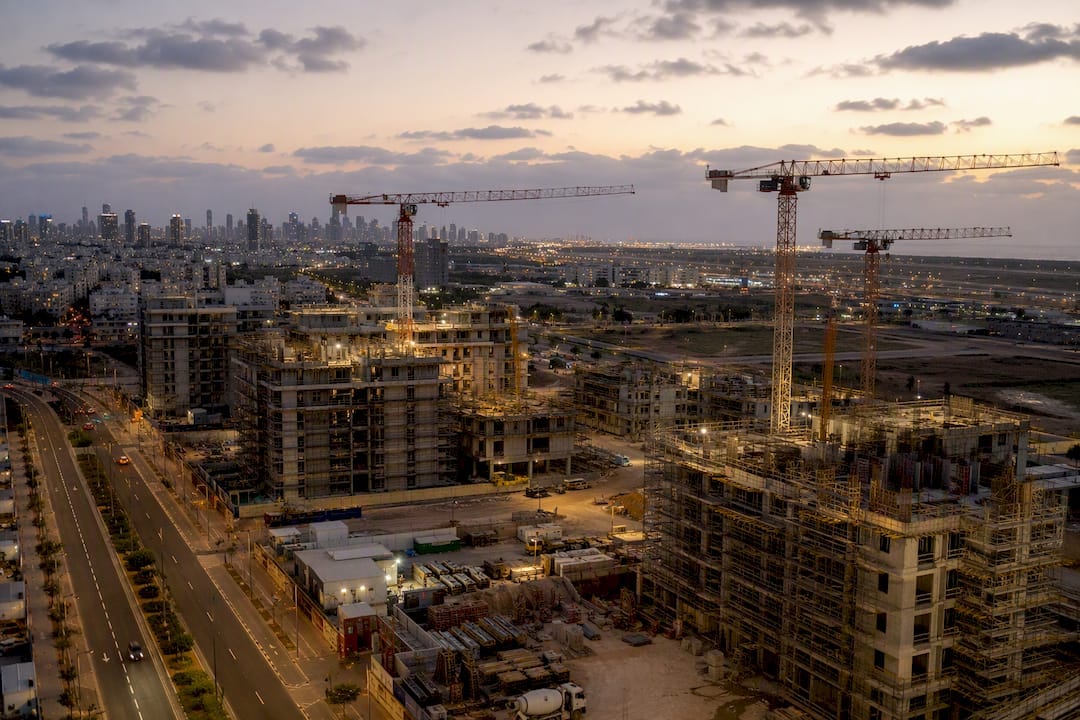
The plan splits the district into three primary zones: Eshkol, Central, and Northern. Eshkol sits closest to the existing city fabric and is the most advanced in construction. Central and Northern extend further along the coastline and completed their land tenders more recently. A coastal park and promenade run through the design, intended to link the new district to the beachfront in a way the old airport fence line never allowed.
Planners have also emphasized district-scale sustainability: centralized logistics hubs, dedicated bike lanes, and green vehicle infrastructure built into the layout rather than added later. Some independent market coverage puts the eventual unit count as high as between fifteen thousand and twenty thousand, depending on how later phases get finalized. Treat sixteen thousand as the baseline and the higher figure as an upside scenario.
- Total district area: approximately 1,450 to 1,500 dunams.
- Housing units: roughly 16,000 in the official program, with some estimates reaching 20,000.
- Parks and green space: around 365 dunams, plus a coastal promenade connecting the zones.
Which Sde Dov Projects Are Under Construction Right Now?
Here’s where the plan stops being theoretical. The Eshkol zone is the most advanced part of the district, and it’s the one place where you can actually see cranes and excavation work rather than just tender announcements.
- Eshkol zone leads the way. Early building permits and excavation have already been reported here, with first occupancy targeted around 2029.
- Named developers are active on the ground. Public tender records and project listings identify Aura, Africa Israel, Tidhar, Gindi, and Israel Canada among the firms that have won plots or launched marketing for Sde Dov units, including the Rainbow project tied to Israel Canada.
- Central and Northern zones are catching up. Land tenders for these sections largely wrapped up more recently, with urban design approvals following through 2026, meaning construction there trails Eshkol by a meaningful margin.
- Verify everything on the record, not the brochure. Every permit, tender result, and detailed plan status is filed with Israel’s national planning portal, Mavat, and that’s the one source that won’t oversell a project’s progress.
If a sales agent tells you a specific Central zone building has a permit, that claim is checkable in minutes on Mavat before you sign anything.
How Will Sde Dov Change Tel Aviv’s Real Estate Market?
Sde Dov is being marketed as one of the biggest coastal land releases Tel Aviv has seen in decades, and that framing is largely accurate. Independent investment analysis describes it as one of the city’s largest urban transformations, with adjacency to Tzameret Park and the Old North cited repeatedly as the safer way to capture upside without taking on construction risk.
Pricing varies significantly by zone, building, and developer, and per-square-meter figures you’ll see quoted in listings shift depending on which phase and which project you’re looking at. Don’t treat any single number as representative of “Sde Dov pricing” as a whole. The district’s phased delivery also means new supply won’t hit the market all at once. That matters, because a sudden 16,000-unit release would flood absorption; a staged rollout over years lets the market digest it more gradually.
Three practical plays emerge for buyers:
- Buy early in Sde Dov itself. Lower entry pricing, but real construction timeline and specification risk.
- Buy adjacent in the Old North or near Tzameret Park. Higher entry cost, but you get an existing, livable neighborhood and immediate rental or occupancy potential.
- Long-hold a completed unit once a phase delivers. Less upside than buying pre-construction, but far less exposure to delays or design changes.
Pro Tip: Ask any developer for their actual tender-winning contract and the specific lot number tied to your unit. Staged tenders mean the district is really a collection of separately contracted plots, not one uniform project, and each lot carries its own permit history.
The single biggest risk isn’t overpricing. It’s delay. Large masterplan districts routinely see municipal infrastructure, roads, sewer, district energy, lag behind residential handover, so a finished apartment doesn’t always mean a finished neighborhood.
What Legal Steps Should Foreign Buyers Take Before Purchasing?
Buying into a masterplan district from overseas raises the stakes on due diligence, and this is where Israeli property law gets specific enough that generic advice stops being useful. Menora Law works exclusively within Israeli law, and for Sde Dov purchases, four checks come up again and again.
- Confirm land registry and title status. Every lot should have a clean chain of title and match the detailed plan on file with the planning authorities.
- Check masterplan compliance and permits. Cross-reference the developer’s claims against the actual filing on Mavat rather than relying on a sales brochure.
- Review the pre-sale agreement line by line. Israeli developer contracts vary widely on performance bonds, delay penalties, and escrow structures, and the protective clauses are negotiable if you catch them before signing.
- Understand acquisition tax exposure. Non-residents purchasing property in Israel are subject to Mas Rechisha (purchase tax) at rates that differ from those applied to Israeli residents buying a first home, and current brackets should be verified directly with counsel before you commit funds.
Pro Tip: Never sign a reservation agreement before an Israeli attorney has reviewed the escrow terms. A signed reservation can lock you into a deposit structure that’s difficult to unwind later.
Menora Law handles this entire process remotely for overseas clients, including contract review, permit verification, and closing representation, without requiring buyers to fly to Israel for every step.
How Do You Vet a Specific Sde Dov Unit Before Buying?
Once you’ve narrowed down a project, the due diligence gets tactical. Here’s the sequence worth following in order.
- Verify project status on Mavat and municipal records. Confirm the specific lot’s permit stage matches what the developer is telling you, not just the district-wide plan status.
- Have Israeli counsel review the contract before you sign anything. This includes the reservation agreement, not just the final purchase contract. Early-stage documents can carry binding terms.
- Confirm escrow arrangements, VAT treatment, and the expected handover date in writing. Verbal assurances from a sales office don’t hold up if the timeline slips.
- Weigh an adjacency purchase if you need occupancy sooner. An existing unit in the Old North or near Tzameret Park sidesteps construction risk entirely.
Pro Tip: Request the developer’s most recent municipal inspection report, not just the sales floor plan. It tells you where construction actually stands, independent of the marketing timeline.
For a deeper walkthrough of the legal mechanics involved, Menora Law’s guide on buying property in Sde Dov covers the transaction sequence in more detail, and the firm’s broader real estate law overview explains how Israeli purchase contracts differ from what many foreign buyers expect.
Is the Sde Dov Site Being Cleaned Up Before Construction?
Eight decades of aviation use leaves a footprint, and Sde Dov is no exception. Fuel storage, maintenance operations, and decades of aircraft traffic typically require soil and groundwater assessment before residential construction can proceed on former airfield land, and Israeli planning approvals for sites like this generally require environmental review as part of the detailed plan process.
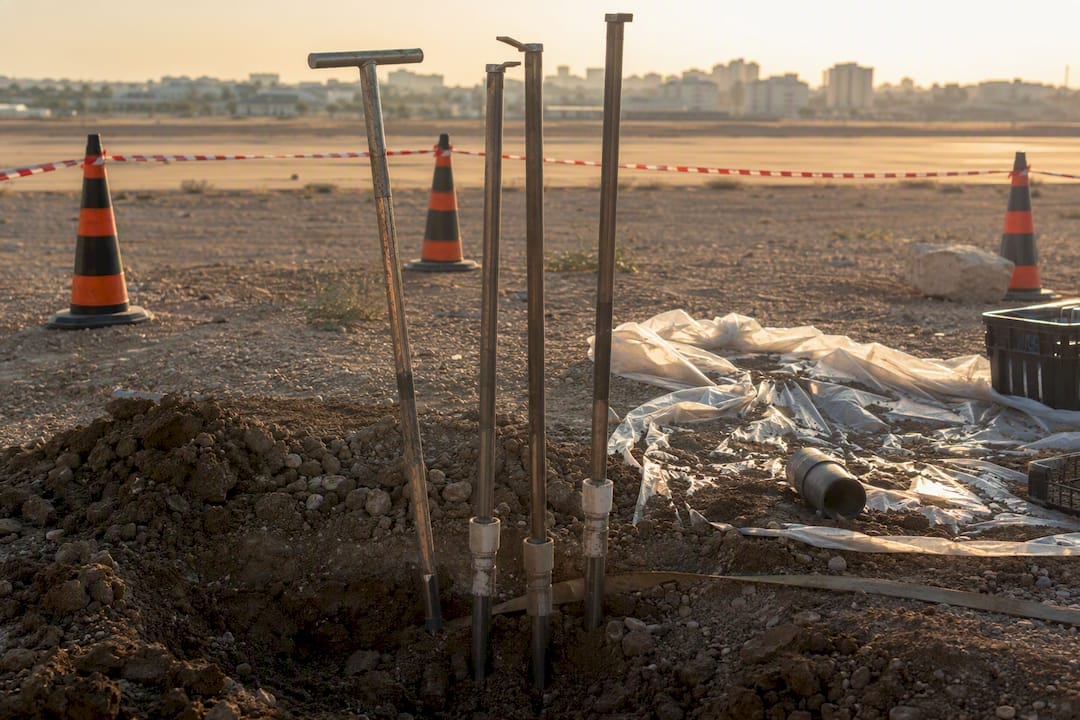
Technical planning attachments, including environmental assessments, are filed alongside the detailed plans through Israel’s planning archives, and buyers who want to see the underlying reports can find technical planning documentation through Israel’s planning authority repositories rather than relying on developer summaries.
Beyond remediation, the masterplan itself leans on sustainability as a district-level design principle rather than an afterthought. The plan incorporates green logistics hubs, dedicated bicycle infrastructure, and coordinated energy planning across the zones, an approach that’s easier to execute on a single, unified site than in a patchwork of smaller infill projects scattered across the existing city.
For buyers, the practical takeaway is this: environmental clearance is a gating item for construction permits, not a footnote. If a project’s excavation has started, that generally signals the site passed the relevant environmental review for that lot. If you’re evaluating a plot where construction hasn’t begun, it’s worth asking directly what stage its environmental assessment has reached, since that can affect how quickly a permit gets issued.
How Involved Are Residents in Shaping Sde Dov’s Development?
Big masterplan districts don’t get approved in a vacuum, and Sde Dov went through the standard Israeli statutory planning process, which includes public deposit periods where residents and stakeholders can file formal objections to a detailed plan before it’s finalized. That process shaped some of the zoning decisions you see in the final TA/4444 plan, particularly around building heights near existing neighborhoods and the coastal promenade design.
Residents of adjacent areas, the Old North, Ramat Aviv, and nearby coastal blocks, have had an obvious stake in how the district integrates with their existing streets, traffic patterns, and beach access. That local pressure is part of why the coastal park and promenade feature so prominently in the approved plan rather than being pushed to a later phase.
Ongoing engagement continues at the tender and construction stage too. Each new zone that comes up for tender typically goes through additional design review, and Tel Aviv’s municipal planning committees weigh in on details like building massing and public space allocation before permits get issued.
For a buyer, this matters practically in one way: plans can still shift at the margins even after the district-level masterplan is locked in. A specific building’s height, setback, or unit mix can change between initial tender and final permit if the municipal review process requires adjustments. That’s another reason to check a project’s current permit status on Mavat rather than relying on renderings from two years ago.
Will Sde Dov Strain Schools, Healthcare, and Utilities Nearby?
Sixteen thousand new housing units means a meaningful influx of new residents, and infrastructure planning for Sde Dov has to account for a lot more than the roads and transit connections that get most of the attention. The masterplan allocates space for public buildings alongside the residential program, which in Israeli district planning typically covers schools, community centers, and municipal service facilities sized to the projected population.
Healthcare access is a more open question at this stage. Existing clinics and hospitals serving north Tel Aviv will absorb some of the new demand, and whether the district gets dedicated healthcare facilities within its own footprint depends on later-phase planning decisions that haven’t been fully finalized in public reporting.
Utilities are the part buyers most often overlook. Water, sewer, and power infrastructure for a district this size needs substantial upgrades, and in large-scale developments like this, utility and municipal infrastructure completion often lags behind residential handover. A building can be move-in ready while the surrounding district infrastructure, roads, connections, and expanded utility capacity, is still catching up. That’s not a hypothetical risk specific to Sde Dov. It’s a pattern in large masterplan districts generally, and it’s worth asking directly, in writing, who is contractually responsible for infrastructure timing on the specific lot you’re considering.
What Overseas Buyers Ask Us About Sde Dov
Most international clients who call us about Sde Dov fall into two camps: investors chasing early-phase pricing, and families who fell in love with the coastal location and want a long-term home. Both groups ask the same underlying question, “How do I move fast without getting exposed?”
Menora Law’s approach is to protect the contract terms without slowing down the deal. We review reservation agreements and purchase contracts remotely, flag the clauses that matter, and negotiate directly with developers or their counsel. If you’re weighing a purchase here, talk to our real estate team before you sign anything, not after.
Sources
- Sdedov
- Sde Dov Airport — Wikipedia
- MAVAT — Israel Planning Portal
- Sde Dov: Tel Aviv’s Biggest Urban Transformation — The Tel Avivi
- Sde Dov Tel Aviv — Real Estate & Investment Guide 2025
FAQ
Is now a good time to buy property near Sde Dov?
It depends on your risk tolerance. Early-phase Sde Dov units offer lower entry pricing but carry construction and timeline risk, while adjacent neighborhoods like the Old North cost more but deliver immediate, verified value.
Can a foreign national buy property in Israel?
Yes. Foreign nationals can purchase property in Israel, but purchases are subject to Mas Rechisha acquisition tax at rates that differ from those for Israeli resident buyers, so confirming current rates with counsel before closing matters.
What are the most established, high-value neighborhoods near Sde Dov?
The Old North and areas near Tzameret Park are the neighborhoods most frequently cited as premium, low-risk alternatives or complements to buying directly inside the new Sde Dov district.
Where is Israel’s military headquarters relative to Sde Dov?
Israel’s defense establishment headquarters, the Kirya, sits in central Tel Aviv, separate from the Sde Dov site, which occupies the coastal strip north of the city center and has no current military function following the airport’s 2019 closure.
How do I check if a specific Sde Dov project has valid permits?
Search the project’s lot or plan number directly on Israel’s Mavat planning portal, which publishes permit status and tender documentation independent of any developer’s marketing materials.

 English
 Afrikaans
 العربية
 বাংলা
বাংলা Čeština
 简体中文
简体中文 Nederlands
 Suomi
Suomi Français
 Deutsch
 עִבְרִית
 हिन्दी
 Magyar
 Italiano
 日本語
日本語 한국어
한국어 Polski
 فارسی
فارسی Português do Brasil
 Русский
 Español de México
 Українська