
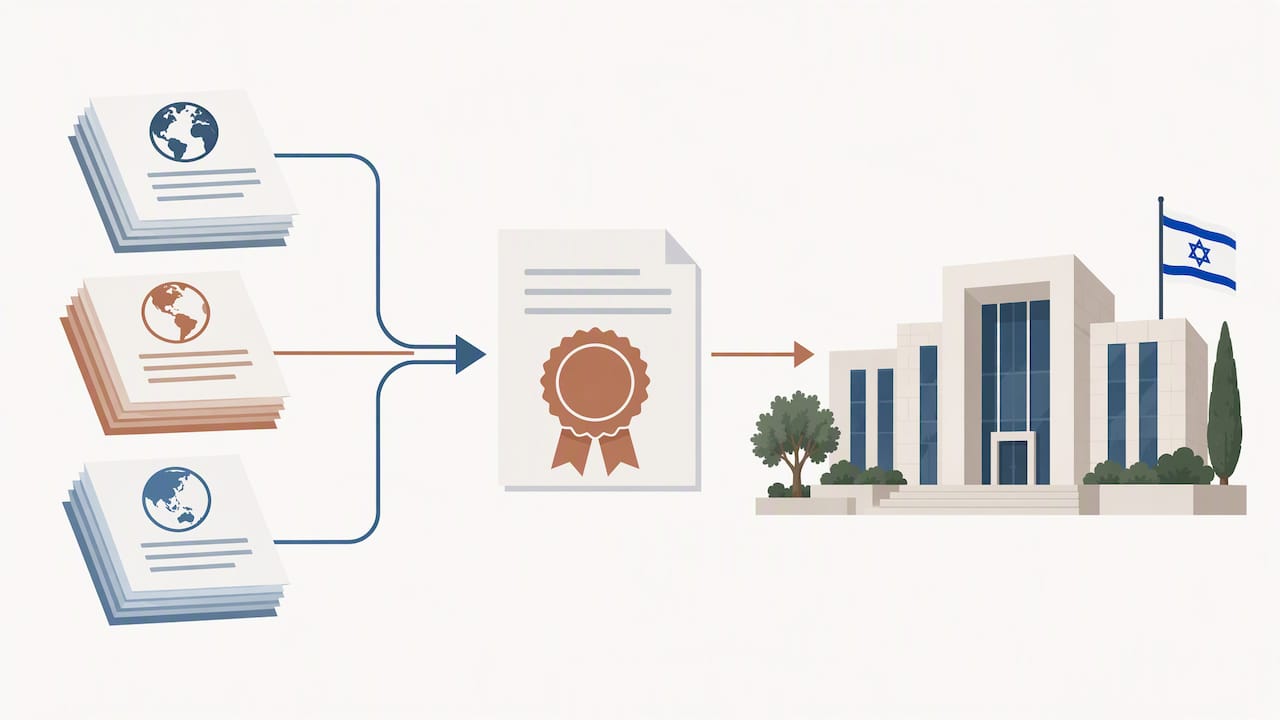
A foreign company can register a branch in Israel, but the parent company stays on the hook legally and financially for everything the branch does. The first move is practical, not conceptual: appoint an Israeli-resident agent and get your corporate documents certified and ready for filing. Once that’s in motion, you build a file for the Registrar of Companies and for the bank that will hold your account.
TL;DR:
- A subsidiary is a separate legal person that can limit parent exposure, while branches generally cannot access grants and incentives reserved for locally incorporated companies.
- Israeli tax generally applies to income from activity inside Israel, while income tied to operations abroad is typically exempt; confirm obligations with Israeli tax counsel.
- Documents signed abroad generally must be signed before an Israeli Consul or notarized and apostilled; incomplete certification can delay registration.
- Banks run a separate account opening review from the Registrar’s filing, so ask your bank about its requirements while preparing the registration documents.
What is a branch in Israel, and what liability does the parent company carry?
A branch functions as a local extension of your company in Israel. That distinction matters because it changes who answers for what happens here.
Under Israeli law, the foreign parent is directly liable for the obligations, debts, and legal actions that arise from the branch’s activity. There’s no corporate shield between the parent and what the branch signs, promises, or breaks in Israel.
- The parent bears ultimate liability for the branch’s contracts, debts, and lawsuits.
- A subsidiary, by contrast, is its own legal person, which limits exposure back to the parent.
- The parent company is directly liable for obligations and legal actions arising from the branch’s activities.
This is a key practical difference between a branch and a subsidiary, and it’s worth understanding before you commit to either structure. Companies carrying meaningful contractual exposure sometimes look into contractual liability insurance as part of managing that parent-level risk.
When should you choose a branch instead of an Israeli subsidiary?
The right structure depends on what you’re actually doing in Israel, not just on what’s faster to set up.
The choice depends on your plans and risk appetite. A subsidiary can limit parental liability, while branches are generally ineligible for incentives and grants reserved for locally incorporated Israeli companies.
- Consider a branch if its structure fits your company’s plans and risk appetite.
- Choose a subsidiary when you plan sustained operations or want liability contained locally.
- Factor in tax incentives: branches are generally ineligible for Israel-specific grants and incentives reserved for locally incorporated companies.
Consider how long you expect to operate, whether you plan to develop IP or R&D locally, and how much parent-level exposure you are willing to carry. These factors can help guide your choice.
Step-by-step checklist to register a foreign branch with the Registrar of Companies
Before filing in Israel, confirm which corporate approvals and documents are required for your company.
- Confirm the corporate authorization and signatory details needed for the filing.
- Gather the corporate documents required for your filing, such as your articles or charter and relevant company records.
- Documents signed outside Israel must be signed before an Israeli Consul or notarized and apostilled, according to Tel Aviv-Yafo Municipality guidance. Check the filing requirements for any translation needs.
- Appoint an Israeli-resident agent. This person is your formal legal link in Israel and must be ready to accept service of process and official notices on the branch’s behalf.
- Submit your filing through the Corporations Authority’s online registration system, following its instructions for data entry, attachments, Kontakt details, and final confirmation.
- Prepare a bank-ready file in parallel, since Israeli banks run their own KYC process separate from the Registrar’s filing requirements.
The documents to check for your filing may include:
- Corporate documents required by the Registrar.
- Articles or charter.
- Documents authorizing the branch and identifying signatories, if required.
- Documents relating to the Israeli-resident agent, if required.
Pro Tip: You can ask your bank about its requirements while preparing documents for the Registrar, so you understand what each process involves.
If your corporate documents are spread across jurisdictions or need signatures abroad, legal help may make it easier to coordinate the process.
Tax treatment and incentives: what foreign branches should expect in Israel
A branch is generally treated as a non-resident for Israeli tax purposes. Income the branch earns from activity inside Israel is taxed at regular corporate rates, while income tied to operations outside Israel is typically exempt.
What this means in practice:
- Israeli-source income gets taxed like any other Israeli corporate income.
- Income from operations outside Israel is usually outside the Israeli tax net.
- Branches are typically ineligible for tax incentives and grants reserved for locally incorporated Israeli companies.
- Check which tax and reporting obligations apply to your branch with Israeli tax counsel.
Foreign companies planning R&D or investment-heavy operations in Israel often misjudge this point. If grants or local incentives factor into your plans, get Israeli tax counsel involved before you file, not after.
Timeline, common delays, and high-level cost drivers
Most of the delay in registering a branch comes from paperwork, not from the Registrar itself. Document certification and apostilles can affect the registration timeline.
Common causes of delay:
- Missing or improperly executed apostilles on documents signed abroad.
- Missing or incomplete corporate documents.
- Appointing the Israeli-resident agent too late in the process.
- Questions or missing information in a bank’s account-opening process.
Pro Tip: Check the certification and apostille requirements early, since document preparation can affect your timeline.
Costs may depend on the legal work and document requirements involved. Ask for a quote based on your circumstances.
How Menora Law helps foreign companies register and operate a branch in Israel
We help foreign companies manage the Israeli branch-registration process, including guidance on document certification and apostilles, Israeli-resident agent arrangements, and filing with the Registrar of Companies. We can also help you identify questions to raise with your bank and tax advisers.
- We represent international companies throughout the registration and setup process.
- We help prepare documents for Registrar filing.
- We can help you consider the bank-account process alongside your branch registration.
| What you get | Why it matters |
|---|---|
| Israeli-resident agent arrangement | Satisfies the legal requirement to accept service of process in Israel |
| Document certification and filing | Helps you prepare documents for the filing process |
| Bank requirements guidance | Helps you check what information a bank may request |
Pro Tip: Bring the corporate documents you have to your first consultation. We can review them and discuss what else may be required.
If you’re planning a branch, a subsidiary, or you’re still weighing the two, reach out for a consultation and a quote tailored to your structure and timeline. We also support the broader legal needs that come with operating here, from real estate transactions to intellectual property registration, so your branch isn’t the only piece of your Israeli presence we can help with.
Practical tips from our experience with foreign branches
Before you start, check the document certification requirements, arrange an Israeli-resident agent, and ask your bank about its process if you plan to open an account.
We can represent companies remotely during this process. Before your first call, have your certificate of incorporation, articles or charter, and a signed board resolution ready. That’s usually enough for us to map out exactly what else you’ll need and how long it will realistically take.
We work with international clients across time zones. You can ask about document certification and banking requirements while preparing your Registrar filing.
— Menora Law
FAQ
Can a foreign company register a branch in Israel without a local subsidiary?
Yes. A branch operates as a local extension of the foreign parent rather than as a separate Israeli entity, and registration with the Registrar of Companies is the standard path. The parent remains directly liable for the branch’s activities.
Who is liable for a branch’s debts and legal actions in Israel?
The foreign parent company carries direct liability for the branch’s obligations, debts, and any legal actions arising from its activity in Israel. This differs from a subsidiary, which is a separate legal person that limits exposure back to the parent, as Tel Aviv-Yafo Municipality guidance explains.
Do documents signed abroad need an apostille for Israeli branch registration?
Yes, documents signed outside Israel generally need to be signed before an Israeli Consul or notarized and apostilled before the Registrar of Companies will accept them. Missing or incomplete apostilles are a leading cause of registration delays.
Are foreign branches eligible for Israeli tax incentives?
Generally, no. Branches are typically ineligible for tax incentives and grants that are reserved for Israeli-incorporated companies, which is one reason some foreign companies choose a subsidiary structure instead.
Does Menora Law handle foreign branch registration remotely?
Yes, we represent international companies remotely during the registration process, including assistance with document certification, Israeli-resident agent arrangements, and Registrar filings.


 English
 Afrikaans
 العربية
 বাংলা
বাংলা Čeština
 简体中文
简体中文 Nederlands
 Suomi
Suomi Français
 Deutsch
 עִבְרִית
 हिन्दी
 Magyar
 Italiano
 日本語
日本語 한국어
한국어 Polski
 فارسی
فارسی Português do Brasil
 Русский
 Español de México
 Українська