
If your company has developers, a subsidiary or customers in Israel, open source compliance comes down to three things: knowing which licenses your code carries, understanding what Israeli copyright law allows when those licenses are broken, and meeting Israel’s data security rules when your software touches personal information. At Menora Law, we advise international clients on Israeli law remotely, so you can sort this out without flying to Israel. This guide walks through each piece in plain terms.
TL;DR
- Open source compliance means honoring the license terms of every third-party component you use, modify, combine or ship.
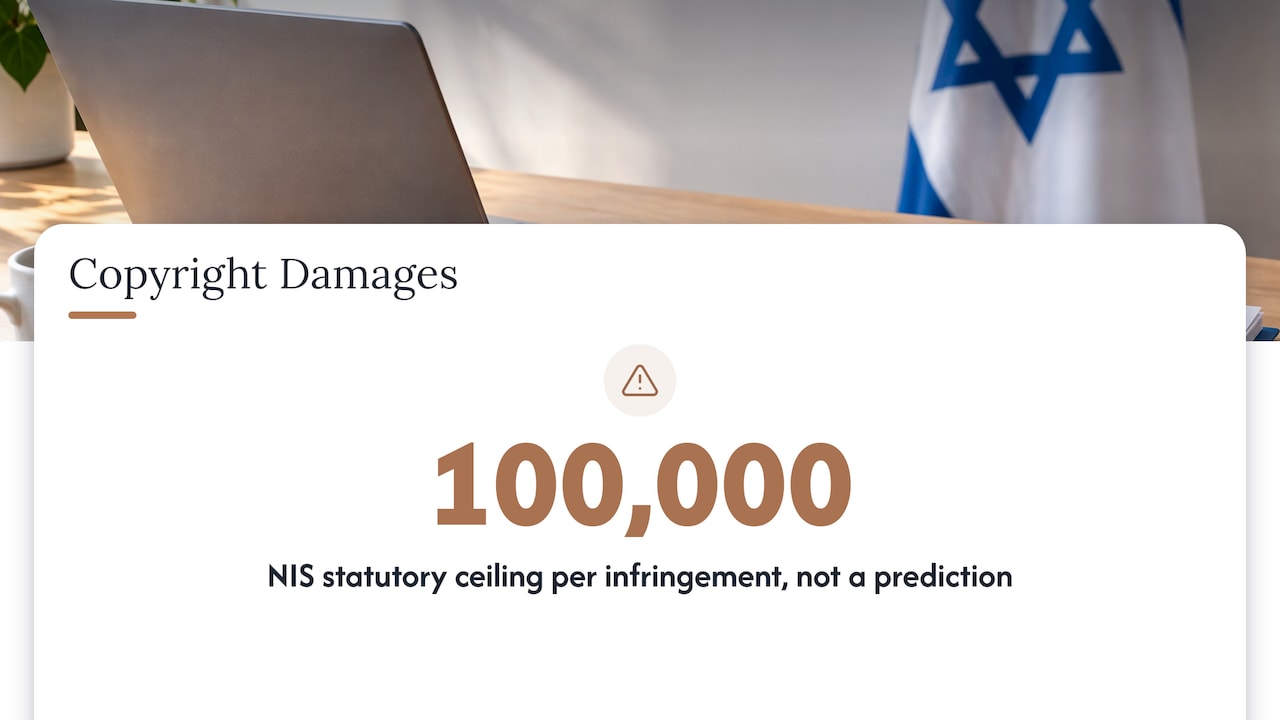
- In Israel, using code outside its license can be treated as copyright infringement, with statutory damages of up to NIS 100,000 per infringement without proof of injury.
- Israel’s Privacy Protection Authority expects database owners to map their software systems, keep them updated and test them on a schedule.
- A repeatable process (scan, identify, legal review, architecture review, final review) catches most problems before a release or a funding round.
- Ан Ізраїльський юрист should check your license terms, contracts and corporate structure so they hold up under Israeli law.
What open source compliance actually means
The Linux Foundation’s compliance handbook describes it as the process by which users, integrators and developers observe copyright notices and satisfy license obligations that come with open source software. A good program also keeps your own proprietary code from being disclosed by accident.
Open source is not free of rules. It is software offered under a license, and the license is a legal condition. Meet the condition and you may use the code. Ignore it and you are using someone else’s copyrighted work without permission.
That matters in Israel for a simple reason. Many US companies build products with Israeli engineering teams, acquire Israeli startups or sell into the Israeli market. The code moves across borders, but the legal question is often answered by Israeli law once the work, the team or the infringement sits in Israel.
What the common licenses ask of you
Not all licenses are equal. The differences decide whether you can keep your own code private.
| License | What it asks of you |
|---|---|
| MIT | Keep the copyright and license notices. |
| Apache 2.0 | Keep notices, note your changes, and it includes an express patent grant. |
| GPLv3 | Make the complete source code of the licensed work and your modifications available under the same license, and keep notices. |
| AGPLv3 | Everything in GPLv3, plus source code must be offered when a modified version provides a service over a network. |
These summaries follow Choose a License. The AGPL row is the one that surprises SaaS companies: you may never hand a copy to a customer, yet running a modified version as a hosted service can still trigger the obligation.
The FINOS handbook adds practical detail. It lists conditions such as including an actual copy of the license rather than a link, keeping notices on every file, recording modifications with dates, licensing derivative works under the same license and providing the corresponding source code. Missing the small items, like the license text itself, is one of the most common ways teams fall out of compliance.
Where teams usually slip
- Pulling in a package that quietly depends on a stronger copyleft license.
- Copying a snippet into proprietary code without recording where it came from.
- Shipping a product to a customer or acquirer before the notices and source offers are ready.
- Forgetting that a changed component needs fresh review.
What Israeli law adds
Israel’s Copyright Act, 5768-2007, is the backbone here. Under section 47, a person who does something reserved to the copyright owner without permission infringes the copyright. An open source license is the permission. If you breach its terms, the permission may not cover what you did.
The remedy can be sharp. Section 56(a) lets a court award damages without proof of actual injury, up to NIS 100,000 per infringement, and under section 56© infringements in a single course of conduct are counted as one. That is a statutory ceiling, not a prediction, and the real exposure in a dispute often includes injunctions, legal costs and a damaged deal timeline. Open source disputes also tend to surface at the worst moment: during due diligence, a financing or an acquisition.
For a deeper look at how Israeli law treats software authorship, ownership and employee-created code, see our guide on software copyright for founders in Israel and the basics of Israeli copyright law.
Who owns the code your Israeli team writes
Open source compliance starts with knowing what is yours. If contractors or employees in Israel wrote part of your product, the contracts need to say clearly who owns the result and how third-party components may be used. If you license software to Israeli customers or partners, the same applies in reverse. We cover the contract side in three legal fixes foreign firms make to software licenses in Israel.
Privacy and security rules that reach your code
Open source is also a security question, and in Israel security of personal data is regulated. In April 2024 the Privacy Protection Authority published guidelines on the secure use of open source code in databases, centered on protecting privacy. They sit on top of the Privacy Protection (Data Security) Regulations, 5777-2017.
The Authority’s regulations page explains what database controllers must do:
- Produce a database settings document covering data types, processing, risks and mitigations, reviewed every year.
- Map the hardware and software systems that matter for security, including software connected to the data and the dates it was updated.
- For high-security databases, run risk assessments and penetration tests every 18 months.
- For medium and high-level databases, run compliance audits every two years.
- Report severe data incidents to the Authority, which may instruct that affected people be notified.
See what that means for open source. Every library connected to personal data is part of your system map. An outdated, unmaintained component is a security finding, not just a license footnote. A good component inventory serves both purposes.
Board responsibility
The Authority’s board guidance says that where personal data processing is core to a company’s activity or creates higher privacy risk, the board should be significantly involved in the database definitions, the data security procedure and the results of risk evaluations, penetration tests and audits. It also says the board must oversee compliance with the Privacy Protection Law and the Data Security Regulations.
Recent change
Amendment No. 13 to the Privacy Protection Law was approved by the Knesset in August 2024. The Authority’s 2024 activity report describes it as the largest reform since the law was enacted in the 1980s, with stronger enforcement, a statutory data protection officer role and updated definitions. The Authority also publishes English translations of the legislation that you can read alongside our Israel data privacy compliance guide.
A review process that works
The Linux Foundation’s guide to using open source code lays out a five-stage process. Here is how it looks for a company with Israeli operations.
- Scan the source code. A scan produces a software bill of materials, license information and conflict reports. Repeat full scans every few weeks, not once a year.
- Identify and resolve. Match each component to its license and fix mismatches: replace, remove or get a different license.
- Legal review. Someone checks what the licenses mean for your product and your contracts. For Israeli entities, this is where Israeli law matters.
- Architecture review. Look at how components connect. Linking and combining code can change which obligations apply.
- Final review. Sign off, then update your inventory, end-user notices and distribution obligations.
The same guide describes a baseline policy: get approval before integrating any open source, audit third-party software, audit all of your software, meet license obligations before a customer receives the product, never carry an approval across products, and re-approve components that change.
Put those rules in writing, name an owner, and connect the inventory to the privacy system map. A compliance guide for regulated platforms shows the same principle in another field: a process only protects you if it is documented and repeated.
A worked example
A US software company acquires a small Tel Aviv team. During diligence, a scan finds an AGPL component inside the hosted product, modified by the Israeli developers. No source offer has ever been published, and the contractor agreement does not say who owns the changes.
Three problems show up together: a network-use obligation that was never met, a possible infringement claim under Israeli copyright law, and a title gap in the code. The fix is practical. Replace or isolate the component, clean up the ownership paperwork, and document the review. Caught before closing, it is a line item. Caught after, it is a dispute.
Promo: Israeli counsel without the flight
We handle Israeli legal work for international clients remotely or on site abroad, including intellectual property, business and corporate matters, and representation of international and American companies in Israel. If you need your licenses, contracts and Israeli structure reviewed together, reach us through Закон Менори.
If you are still deciding how to set up in Israel, our guides on opening an Israeli company as a foreigner і what an Israeli limited company is are good starting points.
Our perspective
Most open source problems we see described are not about bad intent. They come from speed. A team ships, a library gets added, and nobody writes down where it came from.
Our view is that compliance belongs in the same conversation as corporate structure, ownership of code and contracts. For a foreign company in Israel, those pieces connect. A license term only protects you if your Israeli entity, your employee and contractor agreements and your customer contracts line up with it.
That is why we work on Israeli law as a whole for international clients: intellectual property, company formation, mergers, and representation, done remotely, with fast communication. You get one team that understands both the technology question and the Israeli legal framework behind it.
Закон Менори
FAQ
Is open source software legal to use in Israel?
Yes. Open source licenses give you permission to use code as long as you follow their terms. Under Israel’s Copyright Act, acting outside that permission can amount to infringement, so the terms are what keep your use lawful.
What can a court award if a license is breached?
Under section 56 of the Copyright Act, a court can award statutory damages of up to NIS 100,000 per infringement without proof of injury, and infringements in one course of conduct count as one. Other remedies and costs may also apply depending on the case.
Does Israel have specific guidance on open source security?
Yes. In April 2024 the Privacy Protection Authority published guidelines on managing open source code in databases with a focus on protecting privacy. They work alongside the Data Security Regulations, which require system mapping, updates, testing and audits.
How often should we scan our code?
The Linux Foundation guidance suggests full-platform scans every few weeks, with a review before each release. Your own cadence should match how quickly your code changes.
Can we handle this remotely from the US?
Yes. We advise international clients on Israeli law remotely and can meet on site abroad, so you do not need to travel to Israel.
Sources
- Copyright Act, 2007 (WIPO Lex)
- Open Source Compliance Handbook, Linux Foundation
- Licenses, Choose a License
- OSLC Handbook Licenses, FINOS
- Data Security Regulations, Privacy Protection Authority
- Role of the Board of Directors guidance, Privacy Protection Authority
- Legislation, Privacy Protection Authority
- Privacy Protection Authority 2024 activity report
- Using Open Source Code, Linux Foundation


 English
 Afrikaans
 العربية
 বাংলা
 Čeština
 简体中文
 Nederlands
 Suomi
 Français
 Deutsch
 עִבְרִית
 हिन्दी
 Magyar
 Italiano
 日本語
 한국어
 Polski
 فارسی
 Português do Brasil
 Русский
 Español de México
 Українська