
Sde Dov is a 1,500-dunam beachfront redevelopment on Tel Aviv’s former Dov Hoz Airport, built under master plan TA/4444, with roughly 16,000 housing units planned for 35,000 to 41,000 future residents. If you’re weighing whether to buy in, the short version is this: it’s one of the last large land reserves inside Tel Aviv proper, delivery is phased and staggered over most of a decade, and foreign buyers can participate, but only with the right legal groundwork done first.
A few signals matter right now if you’re actually considering putting money into this project:
- The Eshkol zone is the most advanced parcel, with first-occupancy targeted around 2029.
- Named developers, including Aura, Africa Israel، و Tidhar, have taken active roles in specific zones.
- A Green Line light rail connection is planned to run through the district, which will shape which phases feel “livable” earliest and which feel isolated for years.
Pro Tip: Before you sign anything, pull the parcel’s actual plan status on MAVAT, Israel’s official planning portal. A developer’s rendering and a stamped municipal permit are not the same thing, and the gap between them is where delays live.
Key Takeaways
Sde Dov is a scarce, 1,500-dunam Tel Aviv redevelopment where phased delivery, foreign-buyer tax rules, and early legal due diligence determine whether an investment actually pays off.
| Point | Details |
|---|---|
| Site scale is significant | TA/4444 plans roughly 16,000 units across 1,500 dunams for 35,000 to 41,000 residents. |
| Timing varies sharply by zone | Eshkol leads with first occupancy targeted for 2029; other zones trail further behind. |
| Foreigners can legally buy | Non-residents can purchase, but face distinct acquisition tax brackets and fees. |
| Verify before you commit | Check permits and plan status on MAVAT rather than relying on developer marketing. |
| Get legal help early | Menora Law offers remote due diligence, contract review, and escrow support for overseas buyers. |
Primary Sources for Verifying Sde Dov Plans
Readers who want to check the facts directly, rather than take any secondhand summary at face value, should start here:
- MAVAT planning portal: Israel’s official planning database, searchable by parcel and plan number for TA/4444 and related detailed plans.
- Sde Dov district-level MAVAT plan view: A specific plan record useful for verifying zone-level approvals.
- Additional MAVAT plan entry for Sde Dov parcels: Another parcel-level record showing phase-specific approval status.
- Sde Dov Airport historical record: Confirms opening and closure dates along with the airport’s IATA and ICAO codes.
- Technical planning appendix (israac.gov.il): A detailed regulatory document useful for readers seeking plan appendices beyond the headline summary.
This article is general information, not a substitute for advice from a qualified lawyer. Consult a qualified legal professional about your own circumstances before acting on anything here.
Sde Dov Israel History and Why the Airport Closed
Sde Dov Airport opened in the late 1930s and served as one of Tel Aviv’s working airfields for over 80 years, handling domestic flights and Israeli Air Force operations from a stretch of prime coastline just north of the city center. It carried the IATA code SDV and operated for decades as the convenient, close-in alternative to Ben Gurion for short domestic hops.
It closed for good on June 30, 2019, following a government decision that had been building for years. The logic wasn’t really about aviation at all. It was about land. A flat, 1,500-dunam parcel sitting on the Mediterranean, inside city limits, had become too valuable to keep as a low-density airfield when Tel Aviv was choking on a housing shortage.
Commercial flights that once used Sde Dov shifted to Ben Gurion Airport, and military operations relocated to other Israeli Air Force bases, clearing the runway for what is now one of the biggest urban redevelopment projects in the country’s history.
Aviation profiles from the period confirm the same basic sequence: the site’s status changed from active airfield to decommissioned land earmarked for roughly 16,000 new homes. If you want a deeper dive into the airfield’s physical layout and its dual civil-military history, GlobalSecurity’s archive has more detail than most casual readers will ever need, but it’s a useful sanity check if you’re trying to understand why the site sits where it does relative to the coast and the rest of north Tel Aviv.
The TA/4444 Master Plan: Scale and Land Use
TA/4444 is the governing master plan for the entire site, and its numbers are worth knowing cold if you’re evaluating this as an investment rather than just a curiosity. The plan covers approximately 1,500 dunams and calls for about 16,000 housing units, with a significant portion set aside under inclusive housing quotas. Projected population is expected to be in the tens of thousands once the district is fully built out.
The plan isn’t just apartment towers. It sets aside real space for jobs, retail, and green space, which matters a lot for how the neighborhood will actually feel to live in.
A few things stand out in that breakdown:
- The plan includes substantial employment space. That’s not a token office tower, it’s meant to make Sde Dov a place people work, not just sleep.
- Several hundred dunams are planned as parks, making up a notable fraction of the site, which is unusually generous for a Tel Aviv development.
- The inclusive housing share represents a substantial portion of total units and will affect who can buy specific units and at what price, something foreign buyers need to understand before falling in love with a floor plan.
If you want to verify any of this yourself rather than take a developer’s word for it, the plan’s full detailed records live on MAVAT, Israel’s planning authority portal, where you can search parcel by parcel.
What Will Actually Get Built at Sde Dov
Numbers on a page are one thing. What you’ll actually walk into as a resident or renter is another, and this is where the plan gets more concrete.
- Housing mix: A combination of market-rate and inclusive-housing units spread across multiple zones, with the inclusive-housing component tied to municipal affordability policy rather than open-market pricing. Eligibility and allocation rules for those units follow Israeli housing policy, not something a foreign buyer should assume applies the way it might elsewhere.
- Employment and commercial: Office space and retail totaling roughly 455,000 square meters combined, meant to give the district its own economic gravity rather than making it a bedroom community that empties out during the workday.
- Hotels and public buildings: Planned alongside schools, community centers, and other civic infrastructure typical of a full master-planned district rather than a single tower project.
- Coastal promenade and parks: A beachfront park and pedestrian corridor running along the Mediterranean edge of the site, which is arguably the single biggest quality-of-life differentiator versus other new Tel Aviv developments that don’t sit on the water.
- Transport: Planned Green Line light rail stations inside the district itself, with reasonable proximity to Tel Aviv University’s rail station and the city’s main arterial roads.
Pro Tip: Infrastructure sequencing changes everything about early resale and rental value. A unit that looks identical on paper to one three phases later can perform very differently in year one if the light rail station near it isn’t operating yet. Ask developers directly which transit and road milestones are contractually tied to their specific parcel, not just the district as a whole.
Sde Dov’s Construction Timeline and Current Status
Not every zone in this district is moving at the same speed, and that matters enormously if timing is part of your investment thesis.
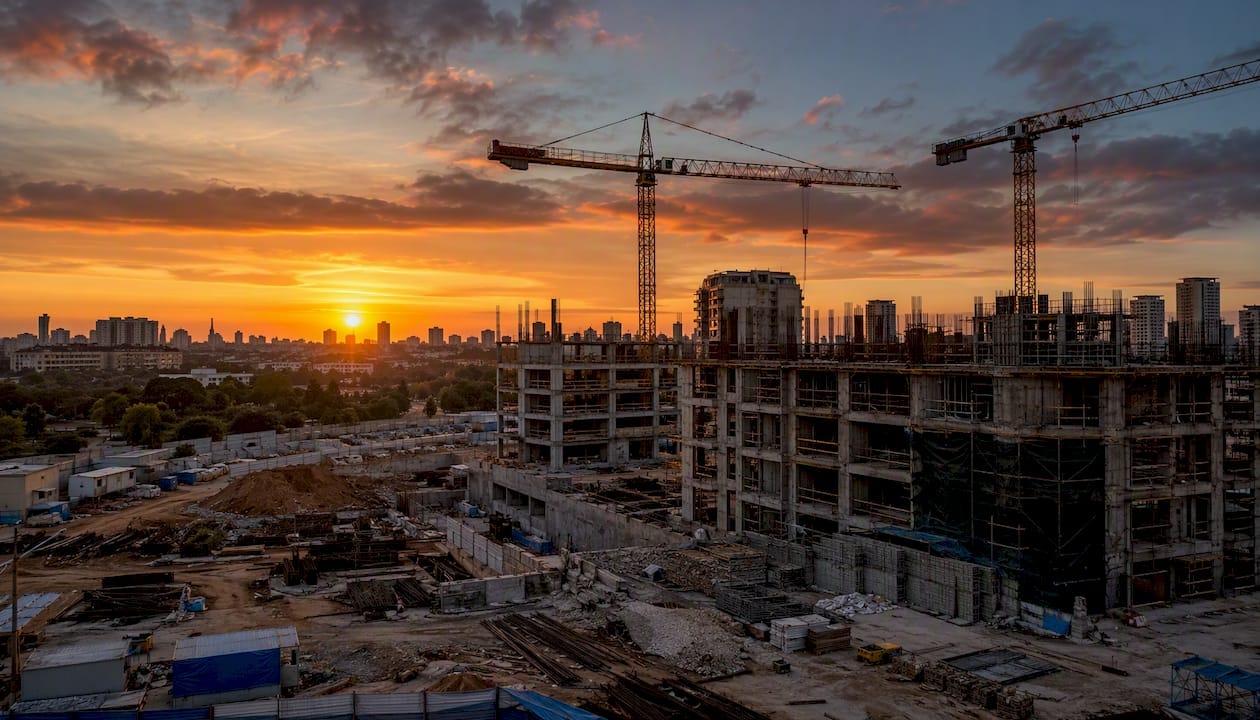
The Eshkol zone is furthest along, with first occupancy targeted for 2029. Market coverage of the district points to earlier activity too, with some project marketing and early sales reported as far back as 2026 to 2027 for select parcels, well ahead of full district completion. The Central and Northern zones sit further back in the queue, with less public detail available on specific handover dates as of now.
| Zone | Status | Notes |
|---|---|---|
| Eshkol | Most advanced | First occupancy targeted 2029 |
| Central | Earlier phase | Development activity reported but less advanced than Eshkol |
| Northern | Earliest phase | Least publicly detailed timeline |
Here’s a practical way to track where a specific parcel actually stands, rather than relying on a sales brochure’s optimism:
- Check the permit stage on MAVAT. A plan being “approved” at the district level doesn’t mean a specific building has a construction permit.
- Look for visible excavation or foundation work, which is a far more reliable signal than a sales office opening.
- Confirm infrastructure connections, especially roads, sewage, and the light rail, are scheduled for the same window as the building itself.
- Track sales launch dates against delivery dates. A wide gap between the two is normal for phased projects, but an unusually wide gap can signal financing or permit trouble.
- Cross-reference developer announcements with municipal tender results, since not every marketing claim lines up cleanly with what the city has actually approved.
Who’s Building at Sde Dov
A handful of developers show up repeatedly across planning coverage and market reporting on this district, and knowing who’s active where helps you separate real projects from speculative marketing.
- Aura has been active in specific residential parcels within the district, and is one of the names most frequently associated with Sde Dov’s early housing phases.
- Africa Israel, one of Israel’s larger and longer-established development groups, has also been tied to activity at the site, bringing a track record that spans decades of large-scale Israeli residential and commercial projects.
- Tidhar rounds out the group of developers commonly cited in connection with Sde Dov parcels, known elsewhere in Tel Aviv for dense, amenity-heavy residential towers.
Developer reputation is only part of the picture. Financing strength and permit stage matter just as much, because a well-known name attached to a parcel that hasn’t cleared its permits yet is still a project with real timeline risk. The most reliable way to verify any developer’s claims is to cross-check municipal permit records and published tender results rather than relying on a sales presentation alone. If a developer can’t point you to a specific plan number on MAVAT, treat that as a yellow flag worth asking more questions about.
Sde Dov Real Estate: Prices, Demand, and Investment Outlook
Market and project-tracking sites covering Sde Dov report early pricing and sales activity tied to the 2026–2029 delivery window for initial parcels, though these figures should be treated as indicative reporting rather than guaranteed pricing. Anyone quoting you a firm per-square-meter number this early in a multi-phase, multi-decade project should be treated with a healthy dose of skepticism.
What’s driving genuine demand here isn’t hype. It’s scarcity. Tel Aviv has almost no undeveloped beachfront land left inside city limits, and Sde Dov is essentially the last parcel of this size and location that will ever come to market in this form.
Market observers and legal professionals working on Israeli property transactions increasingly describe Sde Dov as one of the last major land reserves inside Tel Aviv, a high-impact urban renewal project with genuine mixed-use ambitions and unusually generous public-space commitments for a district this size.
That scarcity cuts both ways for an investor. It supports long-term value, but it also means a lot of buyer interest is chasing units that won’t be livable, in the full sense of transit-connected and amenity-complete, for years. Three risks are worth sitting with before you commit:
- Delivery delays are common in phased mega-projects, and Sde Dov’s own multi-decade buildout timeline leaves plenty of room for individual parcels to slip.
- Inclusive-housing allocations affect roughly 43% of planned units, which shapes both pricing dynamics and who’s eligible to buy specific inventory.
- Transport lag between a unit’s completion and the light rail station near it opening can suppress early rental yields and resale premiums, even in an otherwise strong district.
If you’re weighing Sde Dov against other Tel Aviv opportunities, it’s worth reading a broader investment guide for buying property in Israel before narrowing in on one project.
Can Foreigners Buy at Sde Dov? Legal Steps to Know
Yes. Foreign nationals can legally purchase property in Israel, including within a new development like Sde Dov, and there’s no blanket restriction barring non-residents from buying. That said, the process carries Israeli-specific tax and procedural steps that differ meaningfully from a purely domestic purchase, and skipping them is how buyers end up with expensive surprises.
The single most important cost variable is Mas Rechisha, Israel’s real estate acquisition tax. Rates and brackets differ depending on residency status and whether the property is a first home, and non-residents typically face a different tax structure than Israeli citizens buying their primary residence. Municipal betterment levies and registration fees add further cost on top of the purchase price itself. Because these figures shift with policy changes and individual circumstances, the only responsible approach is confirming your specific bracket with an وکیل اسرائیلی before you sign, not after.
Here’s the realistic sequence for a foreign buyer moving from interest to closing:
- Engage an Israeli real estate lawyer early, ideally before you make any offer, not after you’ve already verbally committed.
- Run a title and encumbrance search on the specific parcel and unit to confirm there are no competing claims, liens, or unresolved planning restrictions.
- Review the developer’s contract line by line, paying particular attention to delivery date guarantees, penalty clauses for delay, and what happens if the project’s phase timeline shifts.
- Confirm escrow and payment protection structures are in place so your funds aren’t released to the developer faster than construction actually progresses.
- Complete conveyancing and registration with the Israel Land Registry, a step that formally transfers and records your ownership interest.
Because acquisition tax brackets and municipal fees genuinely differ for non-residents, and because rules can change, this article is general information rather than a substitute for personalized legal advice; confirm your specific tax exposure and transaction structure with an وکیل اسرائیلی before committing funds. For a deeper look at ownership rules specific to non-residents, see this guide on property rights in Israel for non-residents, and if you’re starting from scratch on the mechanics, how to buy land in Israel with a foreign passport walks through the documentation foreign buyers typically need.
How Menora Law Supports Foreign Buyers at Sde Dov
Buying into a project like Sde Dov from outside Israel means you’re relying on people on the ground to verify things you can’t easily check yourself from لس آنجلس, New York, or anywhere else abroad. That’s the gap Menora Law exists to close for international clients navigating Israeli real estate law.
The core services that matter most for a Sde Dov purchase include legal due diligence on the specific parcel and unit, title and encumbrance searches through the Israel Land Registry, line-by-line contract review before you sign anything with a developer, escrow structuring so your payments are protected against delivery risk, and tax advisory on your specific acquisition tax exposure as a non-resident buyer.
What makes this workable for someone living overseas is the intake process itself. Menora Law handles remote client intake, document review, and representation at municipal and registrar processes, meaning you don’t need to fly to Israel to move a transaction forward. Documents get reviewed, questions get answered, and representation at the necessary registrar and municipal steps happens without requiring your physical presence at every stage.
Pro Tip: Ask any lawyer you’re considering how they handle time zone gaps for urgent contract questions. A firm built around international clients should have a workflow for fast turnaround on document review, not a process that assumes you’re locally available during Israeli business hours.
Menora Law’s focus is squarely on قانون املاک و مستغلات اسرائیل for clients based abroad, which means the advice you get is grounded entirely in Israeli statute and registry practice rather than a generalist approach borrowed from other jurisdictions.
Due Diligence Checklist Before You Sign or Wire Money at Sde Dov
A large, phased, multi-developer district like Sde Dov has more moving parts than a single-building purchase, which means your due diligence needs to cover more ground too.
Work through this before signing anything:
- Confirm the developer’s actual permits for the specific building and phase, not just the district-wide plan approval.
- Verify land-lease or ownership status on the parcel, since much of Israel’s land operates under long-term lease structures rather than freehold ownership.
- Check affordable-housing obligations tied to that specific parcel, since inclusive-housing quotas can affect pricing and eligibility for neighboring units.
- Review the infrastructure delivery timeline for roads, utilities, and the Green Line connection relative to your unit’s promised handover date.
- Confirm escrow and buyer protection mechanisms are contractually specified, not just verbally promised by a sales agent.
Questions worth asking every developer or agent directly:
- What is the contractual delivery date, and what penalty applies if it slips?
- What mortgage or financing options exist for foreign buyers specifically?
- What condominium bylaws will govern shared spaces once the building is occupied?
- Are there clawback provisions or phased handover terms buried in the contract?
Watch for these red flags:
- Permits that are “pending” with no clear timeline for approval.
- Any signal of developer financial distress or insolvency risk.
- Vague or shifting commitments on infrastructure completion dates.
- Public notices from the municipality that contradict what a sales team is telling you.
A Practical Perspective on Sde Dov for Different Buyer Types
Sde Dov doesn’t fit every investor profile the same way, and pretending otherwise does readers a disservice. For a long-term owner-occupier who plans to live in the unit for a decade or more, the district’s scale, coastal park, and eventual transit access make it a genuinely strong bet, even accounting for a few rough years before the neighborhood fully matures. For a buy-to-rent investor, the calculation is tighter: early rental yields will likely lag in phases where transit isn’t operational yet, so timing your purchase to a zone closer to infrastructure completion matters more than chasing the lowest entry price. For a purely speculative investor hoping to flip quickly, Sde Dov is a riskier bet than it looks on paper, because Israeli mega-projects routinely slip their timelines, and a speculative exit strategy depends on a delivery schedule you don’t control.
The one variable every buyer type should weight more heavily than they usually do is infrastructure sequencing. A unit in an early-delivered building sitting next to an unfinished road network isn’t the same asset as that same unit two years later once the Green Line station down the block is running.
Pro Tip: Try to align your purchase timing with a specific, verifiable infrastructure milestone, like a permit issuance or a transit construction start, rather than a developer’s marketing calendar. Marketing timelines slip constantly. Permit and construction milestones are harder to fake.
Ready to Move Forward on a Sde Dov Purchase?
If you’ve made it this far, you’re probably past the “just curious” stage and thinking seriously about putting real money into Sde Dov. That’s exactly where Menora Law’s Israeli real estate practice is built to help. Unlike a general-purpose overseas law firm that treats Israeli property law as an occasional side matter, Menora Law works exclusively within Israeli law and handles the full transaction remotely, so you don’t need to fly to Tel Aviv to get proper legal protection on a deal this size.
Getting started is straightforward. A first consultation typically covers your target parcel, the developer’s current permit status, and your specific tax exposure as a non-resident buyer. Before that call, it helps to have the developer’s proposed contract, any marketing materials referencing the specific unit or phase, and your passport and residency documentation ready to share. From there, Menora Law can run title and encumbrance checks, review the contract clause by clause, and structure escrow protections before you commit a shekel.
For readers ready to take the next step, start with a review of Menora Law’s real estate law services for foreign buyers, or explore the practical buyer checklist in Israeli real estate law: what buyers and investors must know before scheduling your consultation.
Sources
سوالات متداول
Is Sde Dov Airport Still Operating?
No. Sde Dov Airport permanently closed on June 30, 2019, with commercial flights moved to Ben Gurion Airport and military operations relocated to other Israeli Air Force bases.
Can Foreigners Buy Property at Sde Dov?
Yes, foreign nationals can legally buy property in Israel, including at Sde Dov, but non-residents face distinct acquisition tax brackets and should confirm their exact tax exposure with an Israeli real estate lawyer before signing.
What Is the Wealthiest City in Israel?
Tel Aviv and its affluent northern suburbs consistently rank among Israel’s wealthiest areas, and Sde Dov’s location within Tel Aviv proper is part of what makes the district attractive to both local and international buyers.
Is Now a Good Time to Buy Property in Israel?
Timing depends heavily on which specific project and phase you’re evaluating; Sde Dov’s earliest zone, Eshkol, targets 2029 for first occupancy, so buyers should weigh entry price against how many years remain before infrastructure and transit are fully operational.
Which City in Israel Is Considered the Safest to Live In?
Safety rankings vary by source and criteria, but established, well-planned urban districts with strong municipal infrastructure, a category Sde Dov is designed to fit once fully built, tend to rank favorably compared to less-developed areas.
What Are the Most Active New Building Projects in Tel Aviv?
Sde Dov stands out as one of the largest active redevelopment projects in Tel Aviv, with developers including Aura, Africa Israel, and Tidhar actively engaged in specific zones of the district’s phased buildout.


 English
 Afrikaans
 العربية
 বাংলা
বাংলা Čeština
 简体中文
简体中文 Nederlands
 Suomi
Suomi Français
 Deutsch
 עִבְרִית
 हिन्दी
 Magyar
 Italiano
 日本語
日本語 한국어
한국어 Polski
 فارسی
فارسی Português do Brasil
 Русский
 Español de México
 Українська