
Yes, trade secrets are protected under Israeli law through the Commercial Torts Law, and owners who document reasonable protective measures can seek injunctions, seizure orders, and damages when misappropriation occurs. The statute also allows courts to issue non-disclosure orders during litigation so a secret is not exposed through the process meant to protect it. If you suspect misappropriation right now, the two things that matter most are preserving evidence immediately and being able to show the steps you took to keep your information secret.
TL;DR:
- Israeli law protects information only when it is nonpublic, hard to discover lawfully, valuable because secret, and guarded through documented measures such as NDAs.
- Section 10 allows courts to presume misuse when someone with access later produces an essentially similar product, unless the defendant gives a credible independent explanation.
- Reverse engineering a lawfully acquired product is not wrongful by itself, so businesses cannot rely on trade secret law to block independent analysis.
- Israeli courts protect specific confidential processes, not an employee’s general professional skills, so claims should identify the secret rather than restrict future work.
- Keep server side algorithms and internal methods secret when disclosure is avoidable; consider patents when disclosure is unavoidable or competitors can reverse engineer the product.
What counts as a trade secret under Israeli law
Israeli law does not protect every piece of confidential business information automatically. The Commercial Torts Law, 5759-1999 sets a specific four-part test in Chapter 2, and information has to satisfy all four parts before a court will treat it as a protected trade secret.
Under that statute, a trade secret is commercial information that is not public, not readily and lawfully discoverable by others, valuable to its owner because it stays secret, and actively protected through reasonable steps taken by the owner. Each element does real work in a courtroom. “Not readily discoverable” means a competitor cannot assemble the same information through ordinary research or observation without real effort. “Confers an advantage” means the secrecy itself has to matter commercially, not just be convenient. A customer list that any sales rep could rebuild from public directories will not qualify, but a pricing algorithm tuned over years of internal testing usually will.
The fourth element, reasonable steps, is where most disputes actually get decided. Courts and practitioners consistently point out that businesses cannot assume internal information is automatically protected just because nobody outside the company has seen it. According to guidance from Innovation Israel, the test asks whether the owner took active, documented measures to keep the information confidential, not whether the information happened to stay quiet.
In practice, “reasonable steps” tends to include:
- Signed non-disclosure agreements with employees, contractors, and partners who see the sensitive material.
- Restricted access limited to people who genuinely need the information to do their jobs.
- Technical safeguards, such as encryption, access logging, and segmented file storage.
- A maintained inventory identifying what the company considers a trade secret and when it was created.
If your company cannot point to any of these when a dispute arises, a judge has little to work with, no matter how valuable the information actually is.
How Israeli courts decide whether a trade secret was misused
Once information clears the statutory definition, the next question is whether someone misappropriated it. The consolidated Knesset text lays out what counts as misappropriation in section 6, and the list is narrower than many business owners expect.
- Taking by improper means, such as theft, deception, bribery, or unauthorized copying of protected files.
- Use that breaches a contractual or fiduciary duty, for example an employee who signed a confidentiality agreement and then used the information for a competing venture.
- Receiving or using a secret known to have been transferred improperly, which extends liability to a second company that knowingly benefits from someone else’s breach.
Reverse engineering a product on its own is not automatically treated as improper means under this framework, a point that matters a great deal for manufacturers and software companies worried about competitors taking apart their products.
The evidentiary side of these cases often turns on section 10’s presumption of use. Under this provision, if a party had access to a trade secret and later produces something essentially similar, courts can presume misappropriation occurred unless the defendant offers a credible independent explanation. This shifts real pressure onto defendants once access and similarity are established, which is exactly why plaintiffs spend so much effort documenting both at the outset of a case.
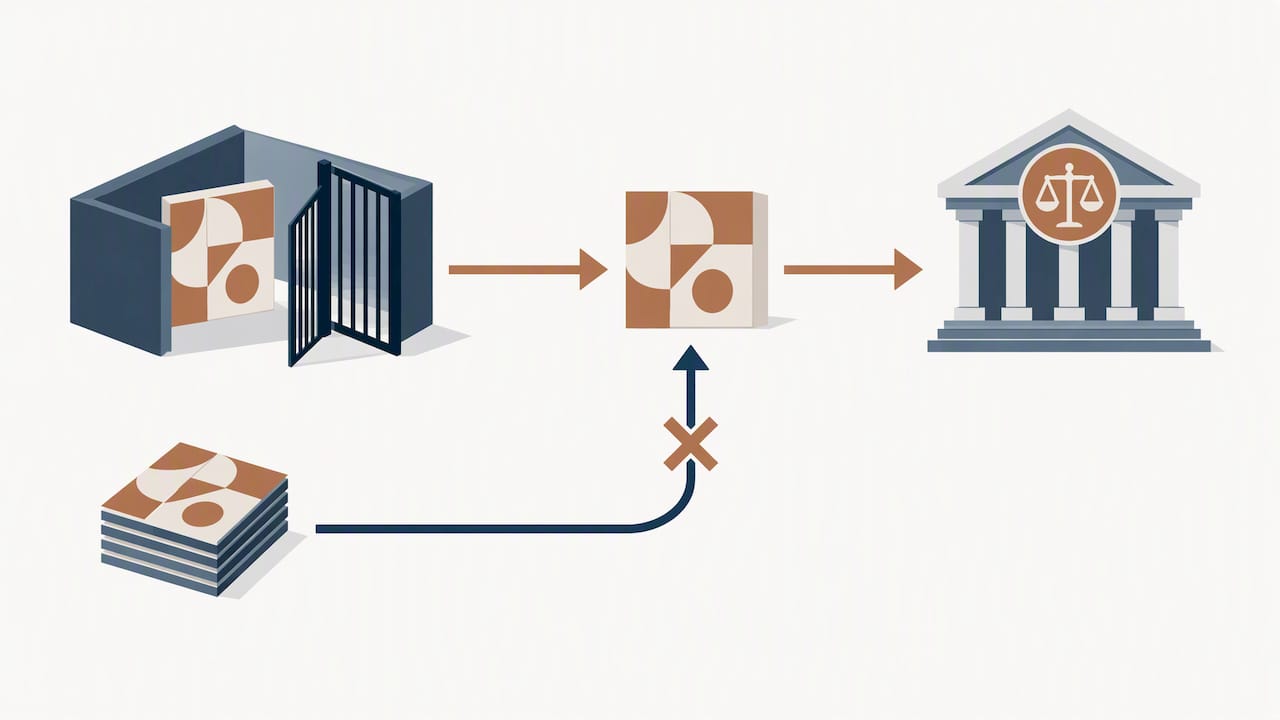
The kinds of evidence that tend to carry weight include system access records showing who touched the information and when, forensic logs and email trails that reconstruct how a file moved, the specific language of employment or vendor contracts, and expert technical comparisons showing how closely a competitor’s product or process mirrors the protected material. Courts weigh these together rather than relying on any single piece of proof, which is part of why early evidence preservation matters so much before records get overwritten or deleted.
Remedies and court protections when a trade secret is misappropriated
Israeli courts have a fairly broad toolkit once misappropriation is established, and the right combination of remedies depends heavily on how fast you move and what you can document.
- Interim and permanent injunctions stopping further use or disclosure of the secret, often the first and most urgent remedy sought.
- Orders for return or destruction of copied materials, devices, or documents containing the misappropriated information.
- Monetary relief, including compensatory damages for losses suffered and, in some cases, disgorgement of profits the wrongdoer gained from using the secret.
- Pre-trial seizure and asset-freezing orders that let a court secure evidence or assets before a defendant has a chance to dispose of them.
The WIPO Lex summary of the Commercial Torts Law confirms that Israel’s framework includes these preliminary remedies as part of its broader IP enforcement toolkit, which is particularly relevant when speed decides whether relief is meaningful at all. Emergency applications can be filed ex parte, meaning without notifying the other side first, when advance warning would let a defendant destroy evidence or accelerate the harm. Courts do not grant these lightly, so the application needs to show urgency and a credible evidentiary basis from the outset.
One procedural feature that surprises a lot of foreign clients is section 23’s court non-disclosure power. Litigating a trade secret case risks exposing the very information you are trying to protect, since court filings are often accessible to the public. Section 23 lets a court restrict access to sensitive filings, seal certain evidence, or limit who in the courtroom can see specific exhibits. This keeps the litigation from undoing the secrecy it is meant to defend.
Pro Tip: Draft your confidentiality protocol for litigation before you need it, not during an emergency filing. Identify in advance which documents would require sealing if a dispute ever reached court, so your legal team can request protective orders without scrambling to classify materials under time pressure.
Courts also weigh proportionality when choosing a remedy. The Knesset’s consolidated statutory text notes that in some circumstances a court may favor restitution of ill-gotten benefits over a sweeping injunction if the equities point that way, particularly where an injunction would cause disproportionate harm relative to the actual misuse. This is one more reason a well-documented, narrowly framed claim tends to fare better than a broad one.
Exceptions and defenses that shape every trade secret dispute
Not every use of similar information is misappropriation, and understanding the defenses matters just as much as understanding the offense when you’re planning enforcement strategy.
- Reverse engineering is generally not wrongful on its own under section 6©. A competitor who buys your product and takes it apart to understand how it works is not automatically liable, which has real implications for how you design products you want to keep confidential.
- The employee skill exception under section 7 protects general professional knowledge and experience that employees carry with them between jobs. Employers who try to stretch trade-secret claims into restricting someone’s general know-how typically lose, because courts distinguish between a specific protected process and the ordinary skills a professional develops over a career.
- Bona fide purchase and public-policy defenses under sections 7 and 8 can shield someone who acquired information honestly and without reason to know it was misappropriated. Courts also retain discretion over remedies in these situations, sometimes limiting relief where equity demands it.
Analysis from Legal 500’s overview of Israeli trade secrets law confirms this pattern: when employees leave for a competitor, Israeli courts balance protecting legitimate trade secrets against an individual’s freedom to keep working in their field. Employers who draft narrow, specific claims tied to identifiable confidential data succeed far more often than those who try to use trade-secret law as a blanket restriction on a former employee’s career.
A practical checklist for protecting trade secrets before a dispute happens
Most trade secret cases are won or lost long before anyone files a complaint. The “reasonable steps” test rewards businesses that built protection into their operations early, and it punishes those that treat secrecy as an assumption rather than a practice.
- Build and maintain a trade secret inventory. List each piece of protected information, who owns it internally, when it was created, and when it was last reviewed. This single document often becomes the centerpiece of evidence in a dispute.
- Put contractual protections in writing everywhere they’re needed. Standard NDAs for employees are a start, but confidentiality clauses belong in contractor agreements, vendor contracts, and partnership agreements too, especially with overseas collaborators who may not assume Israeli confidentiality norms apply to them.
- Layer in technical controls. Encryption for sensitive files, role-based access controls, system logging that records who opened or modified a document, and segmented storage so one breach does not expose everything at once.
- Formalize onboarding and offboarding. New hires should sign confidentiality agreements before they see sensitive material, not after. Departing employees should go through exit interviews that specifically address what confidential information they had access to and confirm return of devices and files.
- Limit knowledge on a need-to-know basis. A smaller circle of people with access to a given trade secret makes both prevention and, if needed, later proof of access far simpler.
- Run periodic audits. Review who still has access to sensitive systems, whether old credentials have been revoked, and whether your inventory from step one still matches reality.
- Keep evidentiary records as a matter of routine, not reaction. Signed NDAs, access logs, version histories of sensitive documents, and any formal risk assessments should be retained systematically, because this is exactly what a court will ask to see if you ever need to prove reasonable steps were taken.
The Innovation Authority’s guidance specifically flags documented technical controls such as access-control logs, system snapshots, and encryption key management records as frequently decisive when courts assess whether reasonable steps were actually taken. A policy that exists only on paper, with no logs or records to back it up, tends to carry far less weight than a thinner policy that is consistently documented in practice.
For technology companies, this checklist often overlaps with software licensing and contract structure. If your trade secrets live inside source code, configuration files, or proprietary algorithms, the contracts governing how that software is licensed to partners or deployed for clients need the same precision as your NDAs. We’ve written more about adapting software licenses to Israeli law for companies in that position, and about how Israeli copyright law interacts with software evidence in disputes where code itself becomes the contested asset.
Pro Tip: Review your trade secret inventory every time a key employee with broad access leaves the company. Departures are the single most common trigger point for disputes, and your records should be current at exactly that moment, not six months stale.
It’s also worth reading up on confidentiality agreement drafting more broadly. A useful outside resource on when and how businesses should use non-disclosure agreements covers the practical considerations behind building an NDA program, which pairs well with the Israel-specific statutory requirements above.
How we help clients make trade-secret decisions and move fast when it matters
When clients ask whether trade-secret protection or a patent makes more sense, the answer depends on what they’re actually trying to protect. Generally, trade-secret protection is recommended for server-side algorithms, internal processes, and business methods that lose their value the moment they’re disclosed, since patents require public disclosure in exchange for a fixed term of exclusivity. For inventions where disclosure is unavoidable or a defined exclusivity window is more valuable than indefinite secrecy, we help clients pursue patent protection instead, and in many cases we structure a combined strategy that uses both.
When a client suspects misappropriation, speed changes outcomes. Assistance includes sending preservation letters that put the other side on notice to retain evidence, preparing ex parte emergency filings when the facts support urgent relief, and coordinating evidence gathering across borders when records, devices, or witnesses sit outside Israel.
Many legal services are designed around what overseas clients can realistically prepare without traveling to Israel:
- Document inventories identifying the specific information at issue and when it was created.
- Notarized declarations that can be submitted as sworn evidence in Israeli proceedings.
- Powers of attorney authorizing a law firm to act and file on a client’s behalf without their physical presence.
Having these prepared in advance can meaningfully speed up emergency filings, since courts move quickly once the right documentation is already in hand.
When trade secret protection beats the alternatives
Here’s the honest version of advice we give clients weighing their options: trade secret protection works best when you can realistically keep something confidential indefinitely and your business doesn’t need to disclose how it works to sell it. Patents make more sense when you need enforceable exclusivity against competitors who could reverse-engineer your product anyway, since disclosure is the price you pay for that stronger, time-limited right.
A mistake we see often among startups building server-side software is defaulting to patents because they sound more impressive, when trade-secret protection combined with a narrow, targeted patent on a specific novel component would actually serve them better. Patents require disclosure, which means a competitor eventually learns exactly how your invention works. A proprietary algorithm that never has to be disclosed can stay protected far longer than any patent term, provided you maintain the secrecy and can prove you did.
The part founders underestimate most is how much the “reasonable steps” requirement depends on habits, not intentions. Cross-border teams especially tend to assume that confidentiality is implied because everyone involved understands the information is sensitive. Courts don’t work off assumptions. If your team spans multiple countries, your documentation and evidence preservation practices need to be coordinated and consistent across every jurisdiction your people and data touch, or the Israeli claim can fall apart on the “reasonable steps” element alone, regardless of how clearly the information was actually misused.
— Menora Law
Protecting your trade secrets with our Israeli legal team
Protecting a trade secret starts long before any dispute reaches a courtroom, and that’s exactly where our work with clients usually begins. Drafting NDAs and confidentiality clauses tailored to Israeli law, building employment agreements that hold up when an employee leaves for a competitor, and preparing the documentation that turns “we consider this confidential” into something a court will actually recognize as a protected trade secret are important steps.
When misappropriation is already underway, timing is everything. Emergency court filings for injunctions and seizure orders can be handled, cross-border evidence preservation coordinated when records or witnesses sit outside Israel, and clients can be represented remotely to avoid travel. A typical engagement may include document review and risk assessment, followed by clear recommendations on next steps and a realistic timeline for emergency relief if the situation calls for it.
If you’re dealing with a suspected trade secret issue or want to put stronger protections in place before a problem arises, visit our main services page to reach our team and schedule an initial consultation.
This article is general information, not a substitute for advice from a qualified lawyer. Consult a qualified legal professional about your own circumstances before acting on anything here.
よくある質問
What makes information a legally protected trade secret in Israel?
Information qualifies as a trade secret under the Commercial Torts Law when it is not public, not readily discoverable by others, valuable because of its secrecy, and actively protected through reasonable steps taken by the owner. All four elements have to be present, and documentation of those protective steps is usually what decides a case.
Can a former employee be sued for using knowledge from a previous job?
Israeli courts distinguish between specific protected trade secrets and an employee’s general professional skills, which remain theirs to use anywhere. Claims that try to restrict ordinary know-how rather than a clearly identified confidential process tend to fail under the employee skill exception described in Legal 500’s analysis of Israeli trade secret law.
Is reverse engineering a competitor’s product illegal in Israel?
No, reverse engineering is generally not treated as misappropriation on its own under section 6© of the Commercial Torts Law. A business that independently takes apart a lawfully obtained product to understand how it works is not automatically liable, though separate agreements or circumstances could still create exposure.
What can a court do if someone steals a trade secret?
Courts can issue interim or permanent injunctions, order the return or destruction of misappropriated materials, award monetary damages, and authorize pre-trial seizure of evidence. Under section 23, courts can also restrict public access to sensitive filings so the litigation itself doesn’t expose the secret further.
How quickly can emergency relief be obtained in a trade secret dispute?
Emergency relief can sometimes be requested on an ex parte basis, without notifying the other side first, when advance warning would let evidence disappear or the harm accelerate. Having document inventories, notarized declarations, and powers of attorney prepared in advance significantly speeds up how fast these filings can move through the courts.
Sources
- Commercial Torts Law, 5759-1999, Israel, WIPO Lex
- חוק עוולות מסחריות, התשנ"ט1999 (Knesset consolidated PDF)
- סודות מסחריים – Innovation Authority (Innovation Israel)
- Introduction to trade secrets law in Israel — Legal 500


 English
 Afrikaans
 العربية
 বাংলা
বাংলা Čeština
 简体中文
简体中文 Nederlands
 Suomi
Suomi Français
 Deutsch
 עִבְרִית
 हिन्दी
 Magyar
 Italiano
 日本語
日本語 한국어
한국어 Polski
 فارسی
فارسی Português do Brasil
 Русский
 Español de México
 Українська